Purchasing for the project
Second-grade 100 mm wall panels for a new hall
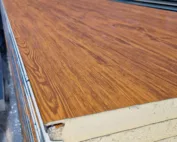
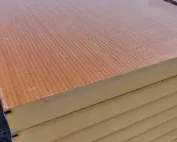
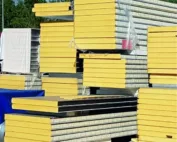
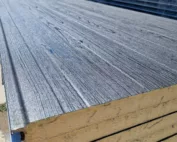
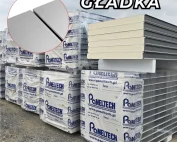
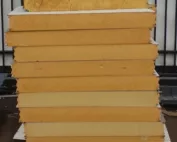
A 100 mm wall panel from a cheaper batch may be used in a new hall if its condition and parameters match the project. The term second grade alone does not explain the reason for the price reduction. The assessment should be based on the specific pieces, the visibility of the walls and the cutting plan. This makes it possible to separate an acceptable cosmetic mark from a defect that matters for the performance of the building envelope. The 100 mm dimension specifies the nominal thickness according to the product designation. On its own it says nothing about the U-value, load-bearing capacity or fire resistance. Data for the specific panel are needed: core, facings, fixing and conditions of use. Panels from different systems do not become interchangeable merely because they have a similar thickness.
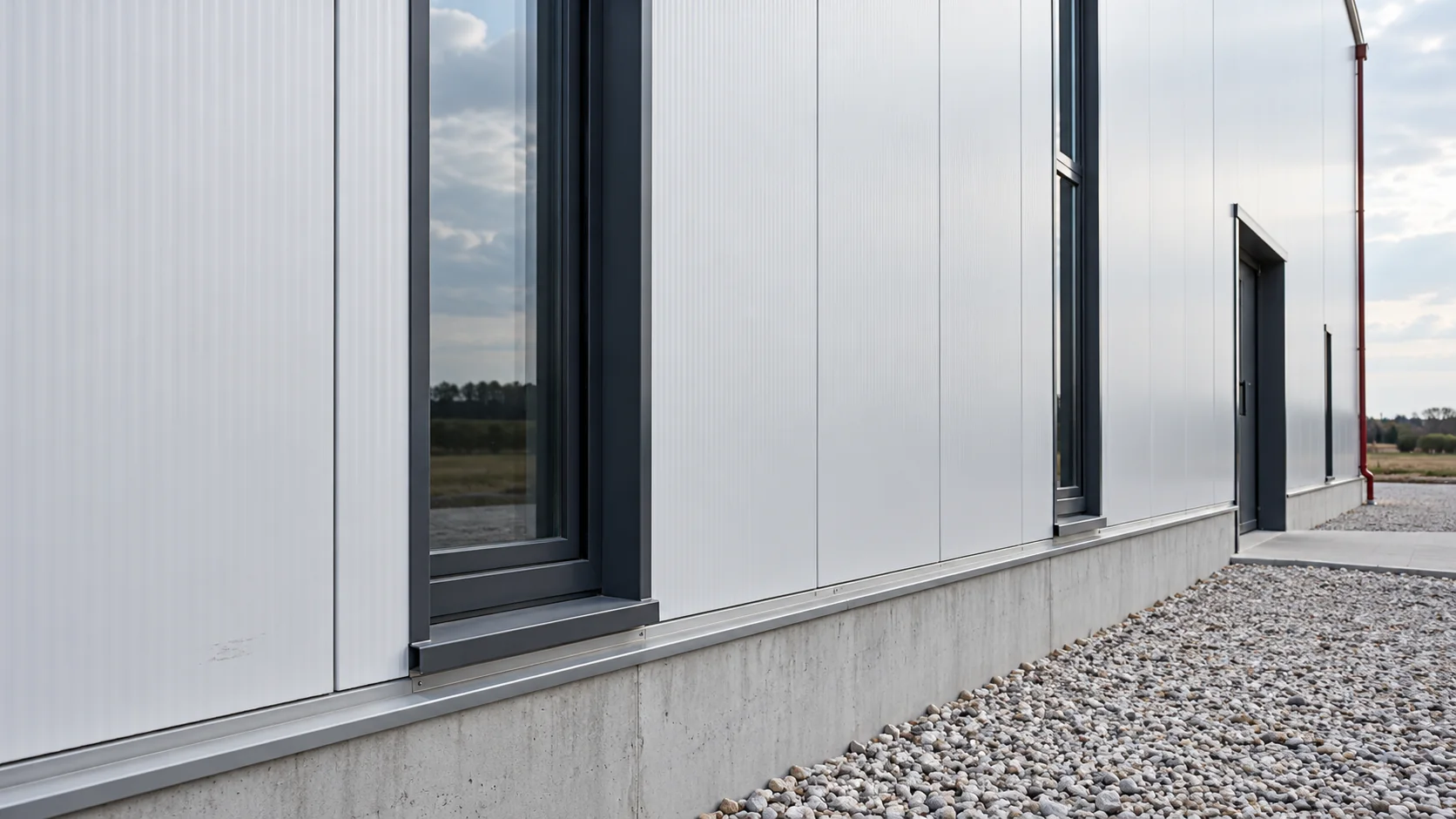
Thickness and grade describe different information
Second grade is a trade term whose meaning must be clarified for the batch. It may relate to appearance, dimensions or other non-conformities. Do not treat it as a uniform technical class. Ask for a description of the reason for the reduction and information on which declared properties remain confirmed.
Assess defects at the intended place of use
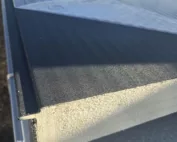
A difference in gloss or a small surface mark may be barely visible on a shaded rear elevation, yet very pronounced on a long façade in side light. Draw up a placement plan for the specific elements before you consider the batch sufficient. Do not base your assessment of the entire delivery on a single favourably presented sample.
Delamination, damage to the edge of the interlock, deep corrosion or deformation that hinders connection must be treated differently. These problems are not reduced to aesthetics. The assessment should clarify the effect on the panel’s performance and its suitability for use, and, where confirmation is lacking, exclude the piece from the intended area.
The assessment should cover both ends and both sides of every piece you plan to use in an important area of the façade.
A white surface requires a consistent overall appearance
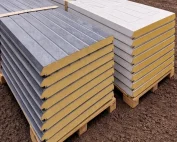
White panels from different batches may look different due to the shade, gloss or texture of the coating. The same general colour description does not guarantee an identical appearance. Inspect the elements in similar light and orientation to those on the building. The protective film may hinder assessment, so the inspection method must be agreed without damaging the material.
Set aside the visible front wall and less exposed areas for separate assessment. Changing the order of the panels may reduce visual differences, but it will not remedy a technical non-conformity. Do not assume that the panel can be reversed either: the inner face may have a different coating and may not be intended for external conditions.

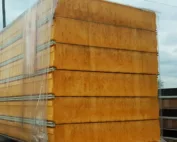
Calculate the usable area, not the entire batch
Let us assume the project requires the purchase of 188 m² of correctly selected panels. The cheaper batch forces the purchase of 206 m², because part of the lengths or pieces does not fit the layout. At an agreed rate of €27.54/m² net, this gives €5673.24. Let us add the accepted €416.61 for additional cutting and labour: the total is €6089.85.
The 188 m² variant, at an assumed €33.33/m², costs €6266.04. The difference is only €176.19, before you take other differing scopes into account. All prices are an illustration of the calculation. The comparison shows why a substantial reduction per metre can yield only a small saving once the suitability of the batch is taken into account.
Match the panels to the joints and openings
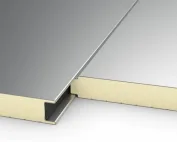
Check the module, profiling, method of fixing and compatibility of successive edges. A similar appearance does not prove that the panels can be safely joined in one field. The corner, plinth and window perimeters must be matched to the actual thickness and the construction of the partition. The flashing should not mask an incompletely closed interlock.
In the design of a new hall, it is worth coordinating the width of the openings with the panel layout. However, do not change the gate dimension solely for a random batch without checking the function of the building. An apparent saving on material may require a new lintel, different flashings and additional work on installations.
Record the acceptance conditions before purchase
The list of accepted defects should be specific: type, location and extent, preferably linked to photos of specific pieces. Determine which elements are to be excluded and how non-conformity with the description is settled. Keep the product identification and the information needed to verify its use in the project.
Do not buy a batch solely on the promise that flashings will cover everything. After installation, access to some connections will be limited. Make the decision after comparing the price with the useful cutting layout and a technical assessment. A well-chosen second grade has clearly defined limitations that have been taken into account in the building.
Questions and answers
Does a 100 mm second-grade panel always have worse insulation performance?
This cannot be determined from the trade name alone. The defect must be identified and the data for the specific product checked. Some differences relate to appearance, others may affect the performance of the panel.
Does a reduced price justify a damaged interlock?
No. The suitability of such a piece requires an assessment in line with its intended use. Damage that prevents a proper connection cannot automatically be regarded as cosmetic.
7 branches. Materials closer to your project.