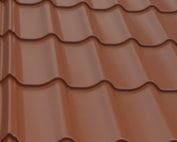
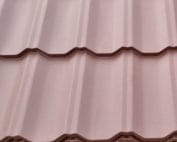
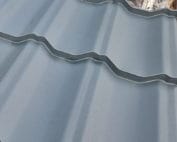
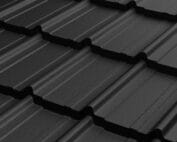
Choosing a covering
Modular or cut-to-length tile-effect roofing for simple and complex roof shapes
When choosing roof covering, decide between modular and cut-to-length metal tiles by preparing two layouts of the same roof slope. Check whether a long sheet fits within production limits and can be safely carried onto the roof; for modules, count the number of joints and the laying time. Compare the cost of the complete set including flashings and transport, not just the price per metre. Durability depends on steel, coating and correct installation, not on the delivery format.
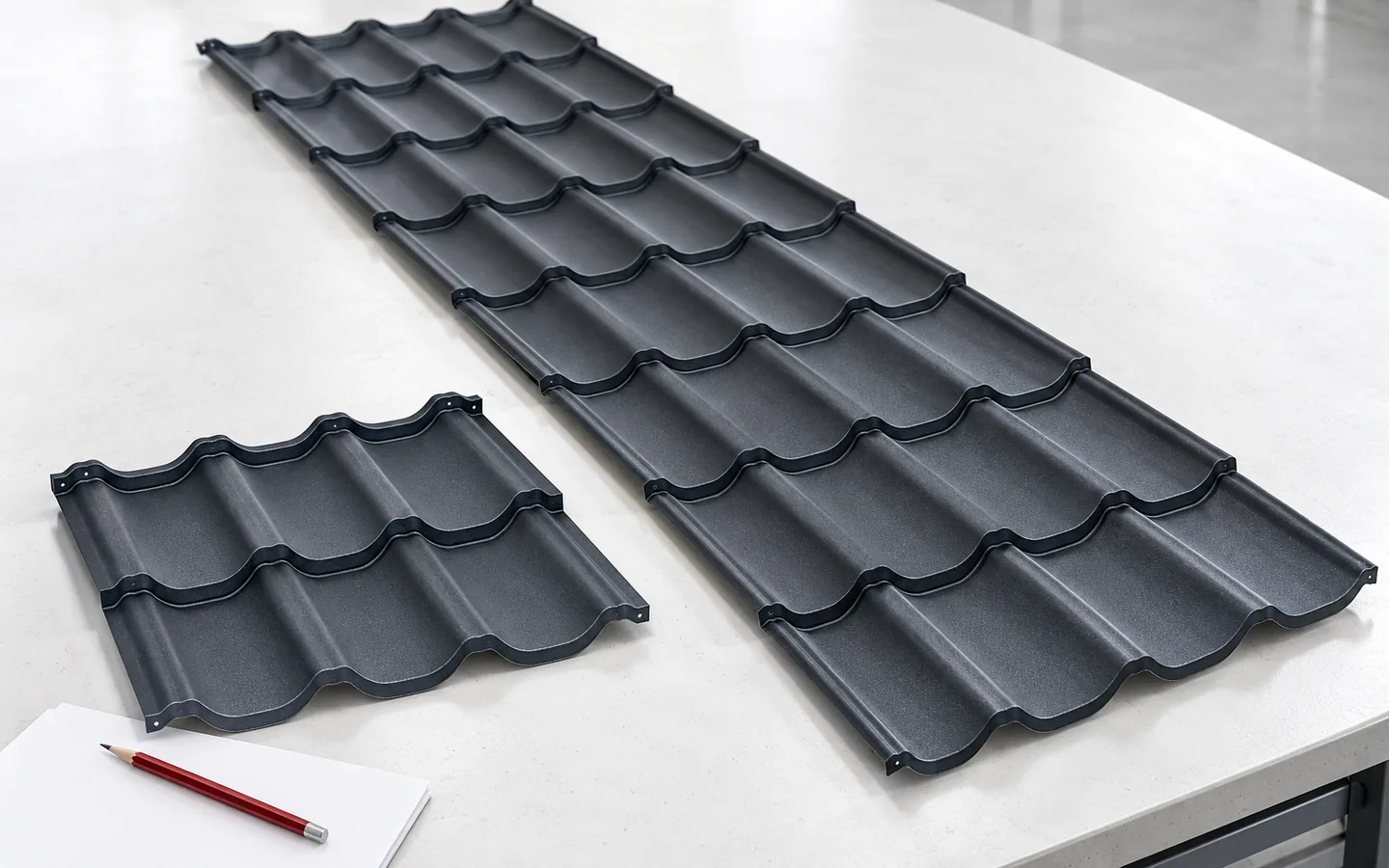
What actually distinguishes a module from a long sheet?
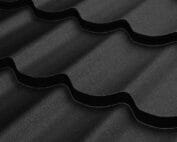
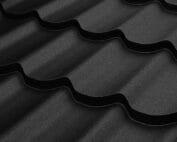
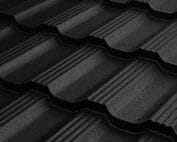
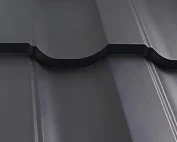
A module is a small sheet with a defined number of pressings. Its ends and joining points are designed for a specific system. Cut-to-size tile-effect metal roofing also has a repeating profile, but the sheet length is selected within production limits. The delivery method should not be equated with quality. Durability is determined by, among other things, the steel, coatings and correct installation.
Sheets with a similar appearance may have different cover widths, pitches and ends. Do not assume that a module from one series fits a long sheet from another. Before purchase, check the technical drawing and the list of compatible accessories. The same colour name also does not guarantee an identical surface appearance. If deliveries are to be combined, confirmation of compatibility is required.
Which variant makes better use of a simple roof slope?
On a gable roof, a long sheet can reach from the eaves to the ridge. This reduces the number of transverse joints and gives a clear laying plan. The condition is the permissible length of the selected model and the ability to safely deliver it onto the roof. A sheet that is too long is more difficult to carry and is more easily permanently deformed during lifting.
Modules can also be used on simple roofs. Carrying small elements is convenient on a tight plot, and deliveries are easier to organise in stages. However, there are more repeating joints that must be executed correctly. Do not assess this difference solely by the number of screws. It is worth comparing working time, equipment access and the team’s experience with the given system.
What works well with roof valleys and dormers?
With numerous slopes, short modules make it easier to adapt the covering to small sections of the roof surface. The size of the element that must be replaced after damage is also smaller. This does not automatically mean zero waste. The profile direction and the position of the edges may prevent a cut-off piece from being used elsewhere.
A reliable comparison requires two cutting plans for the same roof. Include roof valleys, corners, windows and connections to walls. Check the quantity of material ordered and the area it will actually cover. The sum of square metres from the project alone is not enough. For a complex roof, it is worth comparing the organisational advantage of modules with the price of the full set of flashings and installation.

How to compare prices without mixing up units?
A quote may state a price per sheet, per total square metre or per effective square metre. The effective area takes overlaps into account and is smaller than the total. To calculate the cost of a module per m² of covering, divide the sheet price by its effective area. Only figures prepared in this way are suitable for comparison with a quote for cut-to-size sheet.
Add transport, unloading, fixings and flashings to the price. Also establish the cost of any subsequent order and the delivery date. Sometimes a cheaper material requires more expensive logistics or leaves more waste. Do not treat versions with different coatings as equivalent. The comparison should state the core thickness, type of finish and warranty conditions for both variants.
Are installation and storage the same?
The base is similar: even support, a correct eaves edge and ventilation. However, the batten spacing results from the specific profile. In modular systems, the laying sequence and the correct joining of the sheet corners are particularly important. With long sheets, the straightness of entire runs must be maintained. An error in the first element can grow along the rest of the roof slope.
Both versions require protection against water accumulating between the sheets. A damp pack should not remain closed without action. The storage periods and the deadline for removing the film stated in the instructions apply. Sheets are not slid over one another, and cutting is done with tools approved for coated steel sheet. Swarf must be removed promptly, regardless of the format of the elements.
How to decide without guessing?
Give the seller the roof plan, the slope lengths and information about access to the plot. Ask for two complete specifications if both formats are technically permissible. Establish who is responsible for the measurement and the ordered lengths. With unusual details, have the contractor check the plan before production. A dimensional error in a large sheet can be costly.
Choose the variant that the team can install in accordance with its documentation. Record the model, colour, coating and complete set of accessories. Keep the labels so that any subsequent order is easier. Modularity helps with organising the work, and cutting to size makes good use of a regular roof slope. Neither of these features on its own replaces the quality of the material and workmanship.
7 branches. Materials closer to your project.