Flashings
How to check that a set of flashings fits together before installation
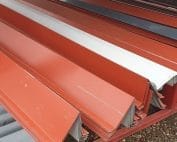
On a finished building, the flashings form one visible set. In the order, however, they are dozens of different parts. It is then easy to overlook a difference in gloss, a mirrored cross-section or a missing end. A pre-installation check allows such discrepancies to be detected before they reach the roof and façade. It is worth checking the set by function and by drawings. Matching metre counts alone do not confirm that everything fits together. It is a good idea to divide the flashings into ridge, gables, eaves, openings and lower wall terminations. Ridge caps, barge flashings, gutter aprons and starter profiles then receive a clear place in the schedule. Chimney flashings and unusual corners should have their own markings.
The set according to locations on the building
This breakdown helps check the completeness of the details. You can go around the building perimeter on the drawing and mark the prepared parts. A missing small end piece is then easier to spot. Otherwise it may only become apparent once the main flashings are already fixed.
The material must match the specification
First compare the type of steel sheet and its thickness. Galvanised, aluzinc and coated steel sheets should not be swapped on the basis of similar appearance alone. The delivery documentation and the agreed material description must be checked. Different parts may have different requirements, even if they belong to the same order.
For coloured coatings, the entire finish system matters. The colour code does not describe gloss, texture or protective parameters. If the specification called for a particular surface, it should be compared with the delivery. It is not worth postponing this check until the difference becomes visible on the façade.
Assess colour on adjacent parts
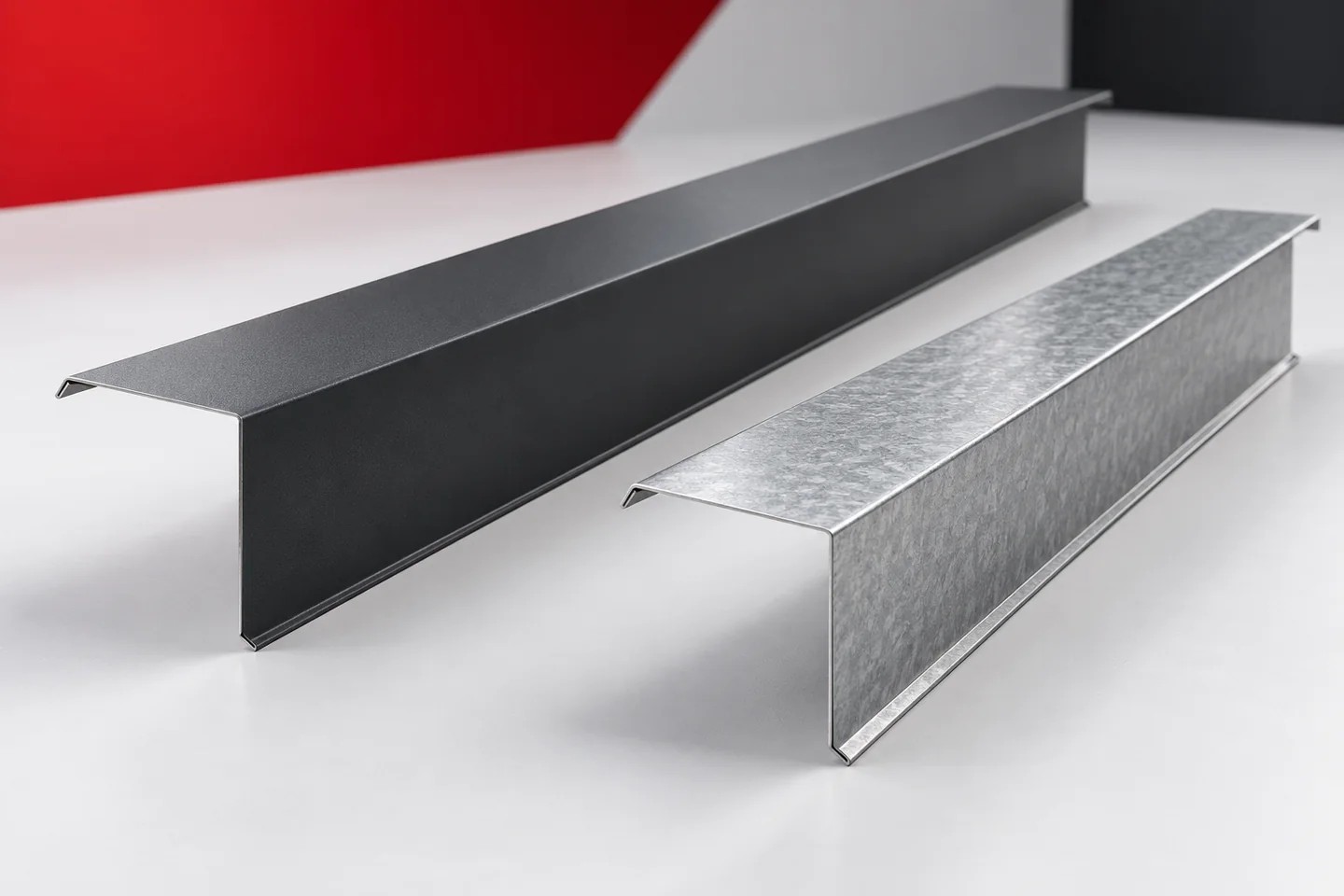
Samples or short sections are best placed side by side in daylight. It is worth checking the joint between the verge flashing and the ridge cap and between the gutter apron and the front cover. Parts viewed separately may appear to match. The difference only becomes apparent where the visible surfaces meet.
The angle of orientation must also be taken into account. Vertical and diagonal sections reflect light differently. If there is a real difference in material or gloss, it should be clarified before installation. An accidental swap of one part for another can disrupt the consistency of the entire finish line.
Compare cross-sections, not just lengths
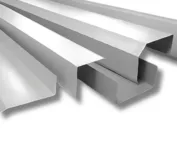
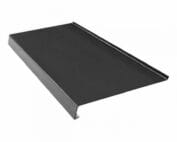
Every profile should match the approved drawing. Arm lengths, angles and hems are checked. Non-standard flashings require particular attention, as their purpose may not be obvious. A part with the wrong angle can look correct until it reaches its proper place.
It is worth paying attention to mirror-image variants. Left and right barge flashings may have bends in different positions. Starter profiles may also require a specific orientation. The coated side should match the drawing. Reversing an element is not always an acceptable way of correcting a mistake.

End pieces create system completeness
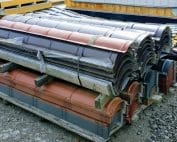
Ridge caps need end and ridge intersection solutions. Gutter aprons must connect with eaves corners. Chimney flashings require an appropriate set of sides and a cover strip at the joint, if the detail provides for one. Purchasing only the main sections does not guarantee complete junctions.
At the inspection stage, it is worth assembling adjacent parts without permanently fixing them. This allows the installation sequence and access to connections to be checked. If there is no room for the last element, the detail needs correction. This should not be solved by randomly cutting the visible edge.
Surface condition before fixing
Flashings should be inspected for scratches, dents and bent edges. Transport film may conceal damage, so the inspection should follow the recommendations for the material. The deadline for its removal also comes from the instructions. It is not a layer left permanently on the finished building.
A minor scratch and a deformation that changes water runoff require different assessments. Touch-up paint will not repair an incorrect cross-section. A damaged part should be clarified before installation so as not to complicate later replacement. It is also important to remove filings and contaminants from the surfaces of adjacent elements.
Keep records for future work
After accepting the delivery, it is worth keeping the current drawings and coating specification. For an extension or replacement of a single part, they will make it easier to reproduce the order. The colour name alone may prove insufficient after years. The cross-section, material and type of finish are also needed.
A coherent set does not mean all strips have the same width. Each flashing has its own task and proportions. The whole is determined by a deliberate arrangement of surfaces, correct connections and conformity with the details. Inspection before installation preserves this order from the first starter profile to the last ridge cap.
Questions and answers
Should all flashings on a building have the same thickness?
That does not have to be the case. The thickness is selected according to the function and geometry of the component. Compliance means meeting the specification, not automatically standardising every part.
What is worth keeping after accepting the delivery?
Approved drawings, the description of the material and coating, the parts list and documentation of any changes. These help with follow-up orders and later repairs.
7 branches. Materials closer to your project.