Installation and details
How an eaves flashing guides water into the gutter
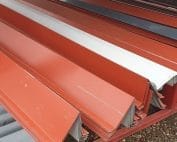
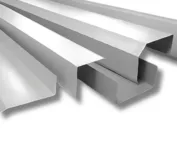
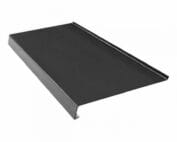
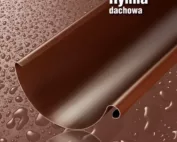
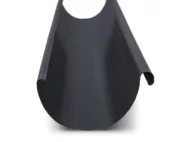
The over-gutter strip directs water from the roof slope into the gutter and protects the roof edge from seepage, so its shape must suit the covering, pitch and gutter position. Check the bend geometry and its placement relative to the gutter, as these determine effectiveness rather than the metal strip alone. Also account for drainage from the underlay and the ventilation inlet, so water from the underlay does not end its run on timber or insulation. Separately, distinguish the over-gutter strip from the under-gutter strip, which shields a different part of the eaves.
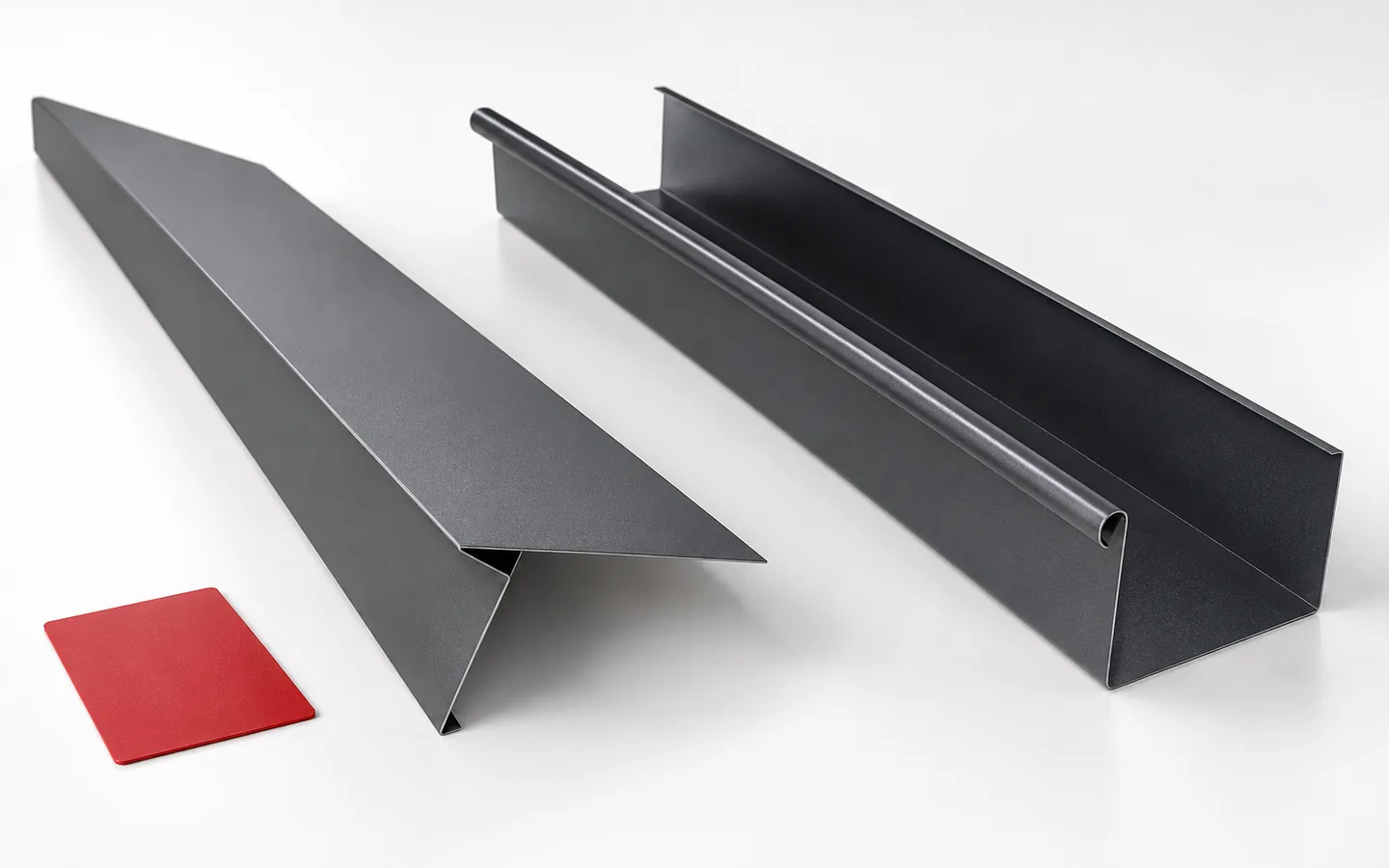
What water path should the flashing ensure?
Rain running down the roof slope should reach the gutter, not go under the eaves board. The gutter apron creates a controlled transition between the edge of the covering and the drainage. Its termination limits water being drawn up under the underside of the sheet. Effectiveness is determined by the geometry of the fold and its position relative to the gutter, not merely by the presence of a metal strip at the eaves.
Water may also appear under the covering on the roof. It reaches there through condensation or wind-driven precipitation. The underlay must drain it to the outside in accordance with the adopted detail. Both paths must be considered together. Water from the underlay should not end its run on timber, insulation or behind the façade simply because the main covering appears tight.
How does the gutter apron differ from the under-gutter strip?
The names refer to different locations and functions at the eaves. The gutter apron connects the runoff to the gutter. The under-gutter strip protects the lower part of the detail, for example the fascia board. The exact shape depends on the roof design. One element does not replace the other simply because both are made from the same coated steel sheet.
It is worth including an eaves cross-section or a clear measurement of the installation location with the enquiry. A flashing name without dimensions does not define the length of the legs or the fold angles. A ready-made element may not fit the existing gutter. For renovation, it is best to assess the entire detail before ordering, rather than bending an arbitrary flashing on site and sealing the resulting gaps.
How should the shape be selected for T18 trapezoidal sheet and tile-effect metal roofing?
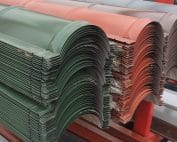
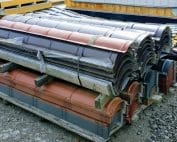
Trapezoidal steel sheet and tile-effect metal roofing terminate differently at the eaves. The profile height, the pressing and the intended overhang are significant. The flashing should work with this termination. Dimensions should not be copied from another product without checking. Even two variants of tile-effect metal roofing may have a different solution for the first batten and the sheet edge.
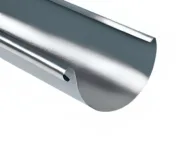
The gutter must collect water in normal rain and with a larger flow. A flashing that is too short may allow water to seep under, and one that is poorly positioned may hinder access to the gutter. Space for sliding snow must also be checked. Correcting the gutter height after the entire covering has been installed is often more difficult than setting out the eaves correctly at the start.

How to connect the apron with the membrane and ventilation?
The membrane is led out so as to maintain the continuity of drainage intended for the entire system. If it is joined to the flashing, a suitable adhesive material and a prepared surface are required. Simply laying the loose edge on the sheet metal may not be sufficient. Wind, material movement and the possibility of the edge lifting during service must be taken into account.
The eaves are also a point of air inflow under the covering. Mesh, a comb or another protective element must not accidentally block the required gap. On the other hand, the open inlet should limit access for birds and larger contaminants. The detail design must reconcile water protection with ventilation. Excess sealing does not always improve roof performance.
How should successive sections be fixed and joined?
The fixing method should ensure stability and allow for thermal movement of the material. Overlaps between sections are made so that they do not direct water under the flashing. Their size and any sealing depend on the system and installation conditions. Fasteners should not be placed randomly in locations through which water constantly flows.
The sheet metal should be materially compatible with adjacent elements. It is worth considering the coating on both sides and the environmental conditions. Cut edges require the treatment specified for the selected product. Swarf and cuttings must be removed before laying the covering. Contaminants trapped under the sheets can later cause stains and coating damage.
How can a poorly executed gutter apron be recognised?
Concerning are water stains on the fascia board, a wet soffit and water appearing behind the gutter. However, the symptoms do not always indicate the flashing alone. A blocked gutter, insufficient drainage or a leak higher up the roof slope produce a similar effect. First, the source of the water must be established. Applying another strip without diagnosis may only hide the problem.
At acceptance, the continuity of the eaves line, the overlaps and the drainage path are checked. It is worth keeping photos before the membrane is covered. They will facilitate assessment of the detail during a later inspection. A good gutter apron does not have to be complicated. It must fit the covering and the gutter and protect those places that can no longer be easily inspected after the work is completed.
7 branches. Materials closer to your project.