Fibre cement coverings
Fibre cement roofs near trees: appearance and maintenance
Trees change the light, shelter the building and influence how well the roof dries. Fibre cement sheets can be used in such surroundings, but their later maintenance should be planned for. Asbestos-free fibre cement is not immune to deposits and lichens. Drainage, detailing and the possibility of safe inspection also determine the long-term result. In summer the crown can shade the roof slope heavily, while in winter it exposes it to light and wind. This change should be taken into account when choosing the colour and assessing drying. A photo of the plot taken on a single day does not capture the full conditions. Places where leaves regularly collect at the edges also matter. The presence of a tree need not be treated as a reason to give up on the material.
See the roof at different times of the year
What is needed is rather an awareness of additional tasks. A gutter beneath the crown may require more frequent observation than a roof slope in open terrain. The maintenance plan should match the surroundings, not a single universal frequency.
In the shade, the material looks different
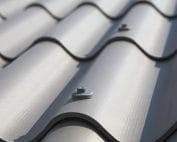
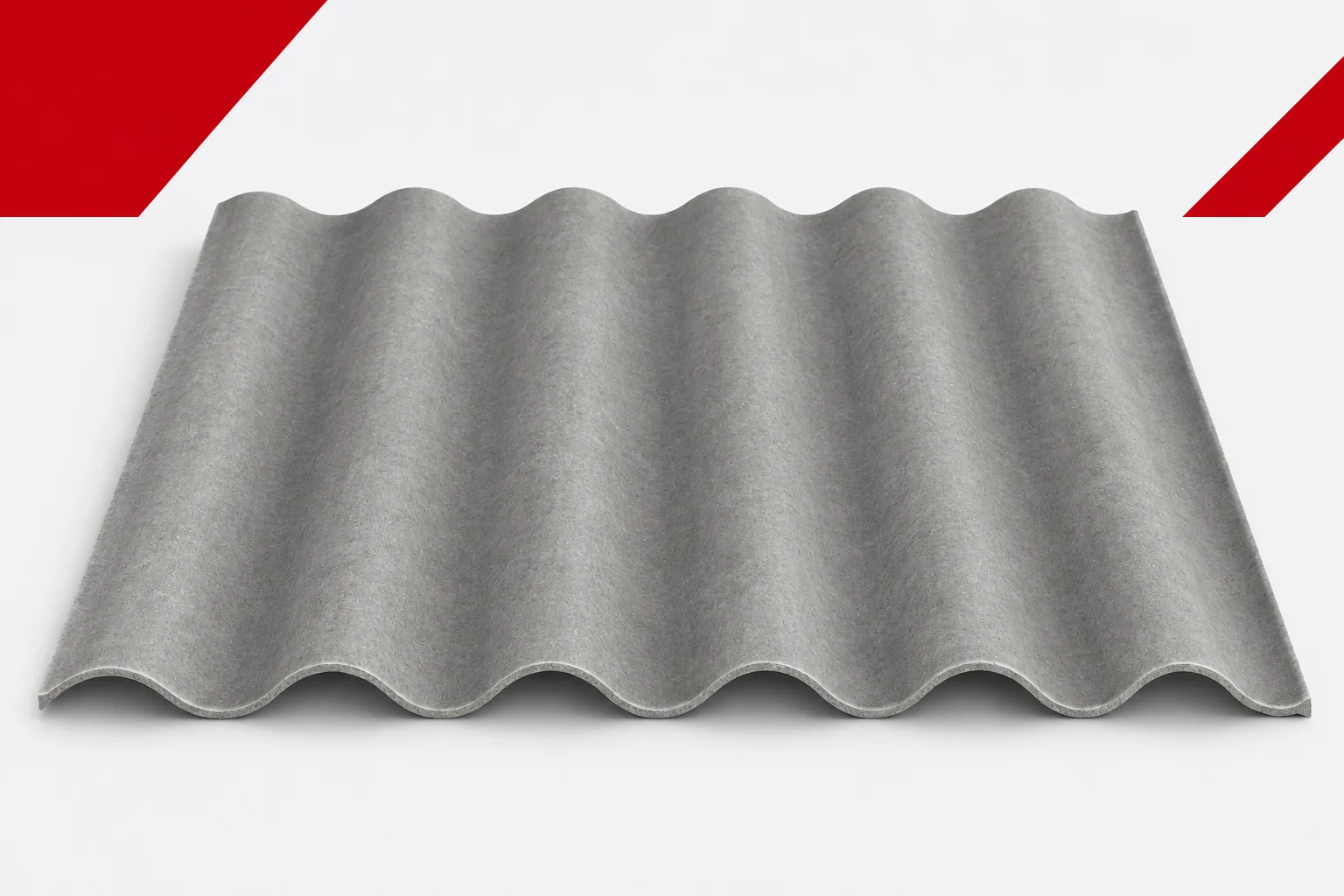
Fibre cement sheets have a distinct rhythm of ridges and valleys. Diffused light beneath trees can reduce the contrast of shadows, and sunlight breaking through the branches can change it. It is worth viewing a sample on the plot. This allows you to check whether the chosen shade suits the façade in shade as well.
A natural grey can harmonise with the surroundings, while the colour of a factory coating can create a more distinct surface. There is no single right choice. It is worth taking possible local soiling into account, however. A very uniform shade in a visualisation does not show all the changes during use.
Leaves can change the path of the water
Contamination trapped in the trough of the wave or at the flashing can impede drainage. The water then starts to behave differently from how it does on a clean surface. Fibre cement sheets should be inspected particularly at penetrations, roof valleys and gutters. These places can accumulate material from the surroundings.
Asbestos-free fibre cement will not solve the problem of a blocked outlet. Gutters must have a proper drainage path and access for cleaning. If a terrace, storage area or fence is later created under the eaves, it is worth checking whether it will hinder maintenance. A small landscaping detail can change the convenience of maintaining the entire roof.
Prolonged dampness encourages changes to the surface
Mosses, algae and lichens may appear on the material. Their mere presence does not prove a loss of watertightness. What matters is whether they retain water or enter the joints. Fibre cement sheets should be assessed by function, not solely by resemblance to the appearance of a new sheet.
It is worth distinguishing biological growth from white mineral efflorescence. Their causes and the appropriate approach differ. One aggressive agent should not be used for every change. Correct identification allows the treatment to be limited to the actual need and avoids damaging the coating.
Cleaning should be gentle and approved
The method depends on the specific board and finish. A strong jet can damage the surface or force water under the lap. High pressure is discouraged in the instructions for some systems. Before work, the material recommendations must be checked rather than relying solely on effectiveness on other substrates.
Asbestos-free fibre cement may have a coating sensitive to a particular preparation. Corrugated fibre cement sheets and accessories require an assessment of compatibility with the chemicals. Seals and metal may react differently from cement. Any doubts should be clarified before cleaning the entire roof slope, preferably on the basis of the product documentation.
Branches should not load the covering
Contact between branches and the roof can cause rubbing and damage. After strong wind, it is worth inspecting the roof slope from a safe place. A fallen branch should not be removed by walking on the sheets without preparation. The condition of the covering after an impact requires careful assessment.
Work on trees is planned so that no weight is dropped onto the roof. The way it is carried out should correspond to the conditions of the plot and the applicable requirements. The board should not be treated as a shield capable of absorbing any impact. Its performance properties relate to specified conditions, not to random point loads.
Moisture under the roof may have another source
A shaded roof slope and a damp interior can create the conditions for condensation. Fibre cement can temporarily absorb some moisture, but not without limits. The appearance of droplets requires a distinction to be made between a leak and condensation. The mere presence of a tree does not explain every symptom.
Corrugated fibre cement sheets should work together with ventilation and the other layers of the building envelope. Openings should not be closed merely to reduce the blowing in of leaves, without assessing the airflow. Protection against contamination must preserve the necessary functions. Otherwise, one problem can be turned into another.
Plan access before the roof needs cleaning
A safe position is needed to inspect the gutter and the areas beneath the tree canopy. Walking directly on the boards or along the fixing line is not permitted. Space should be left for equipment and access. This also applies to small garden canopies.
Asbestos-free fibre cement can look good in a green setting if its ageing and maintenance are planned for. Keep a sample, the surface designation and photographs taken after completion. Subsequent inspections will allow the rate of change to be assessed. More important than a perfectly unchanging colour is keeping the roof slope clear and functional.
Inspect the plot for shading, falling leaves and access to the gutters. This information will help you choose the finish and a realistic roof maintenance plan.
7 branches. Materials closer to your project.