Expanded polystyrene and thermal insulation
Planning EPS cutting to reduce waste
Less polystyrene waste starts with a good board layout. It is worth calculating the areas, checking the corners and planning how offcuts will be used before cutting. However, the savings must not impair the continuity of the insulation. Too many small pieces create additional joints and make installation more difficult. What counts is the quality of the finished layer, not merely using up every last offcut. Start with the actual dimensions of the surface and the format of the boards purchased. Check where the ends of the rows and narrow strips at the edges will fall. A small shift in the starting point of the layout can reduce the number of difficult cuts. However, the layout must preserve the required offset of joints and the rules specific to the given building component.
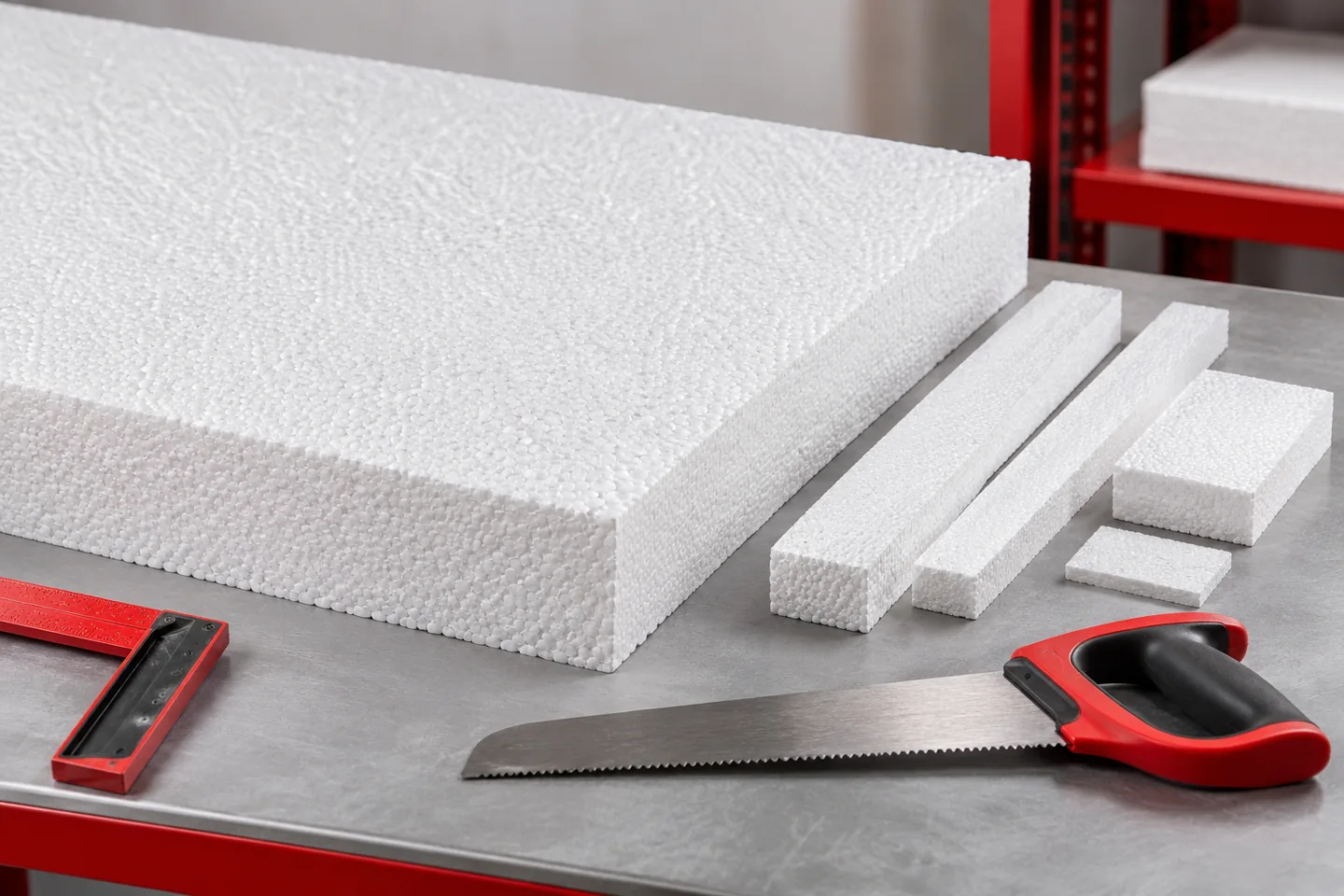
How should the boards be laid out before the first cut?
On the façade, take account of window and door corners. Board joints should not be positioned solely for cutting convenience. The ETICS system requirements also apply to joints in areas susceptible to cracking. First align the layout with these rules, and only then look for material savings.
When is a cut-off piece suitable for use?
A usable offcut should have the required thickness, the right parameters and undamaged surfaces. A similar colour alone does not make it possible to identify the type of EPS. Do not put facade offcuts on the same pile as floor offcuts. After a few days on site it is difficult to establish where a small, unlabelled piece came from.
Plan the use of larger fragments where they can be laid correctly. Do not create a mosaic from many small pieces under the screed or at the facade corner. A large number of joints increases the amount of work and the risk of gaps. The required size and the method of seating the fragments follow from the laying instructions and the conditions at the specific location.
After cutting a board with a rebated edge, the cut edge does not retain the factory profile. It must not be assumed that every offcut still joins in the same way. Plan its position in accordance with the detail. Do not improvise a random tongue-and-groove joint if the accuracy or geometry does not allow the required connection to be reproduced.
How should you measure so that you do not have to correct every cut?
Measure at the installation location, taking into account the actual run of the walls and edges. The length of a room may differ at two opposite walls. Where there are many similar cuts, first check one piece. Only once it fits should you transfer the dimension to the next boards. This is simpler than correcting an entire badly prepared batch.
Mark the cutting line and support the board so that it does not bend during the work. Keep the edges square if the joint requires it. A bevelled cut may look correct from one side, yet once the pieces are put together it may leave a gap through part of the thickness. Such an error should not be filled with a thick strip of ordinary mortar.
How do you match the cutting method to the task?
The tool should allow an even cut of the chosen EPS thickness. For simple trimming cuts, the guidance and the condition of the blade matter. A tool that tears at the structure leaves crumbled edges and more loose granules. The accuracy of the cut directly affects the tightness of the joint and the time needed for later corrections.
Mechanical and thermal cutting create different working conditions. Choose the device to suit the material and follow its instructions, including the ventilation and operator protection requirements. Do not use a flame to shape the edges. For sloped elements, it is worth using a set made on the basis of the design rather than recreating the bevels by eye.
How do you organise offcuts and waste?
At the work station, prepare a separate place for full boards, usable offcuts and waste. Label the pieces by type and thickness. Store them so that they do not become soiled with mortar or mud. This way, the next insert needed will not be cut from a new board merely because the earlier offcut cannot be found.
Collect loose granules and light fragments as you go. The wind easily scatters them beyond the work area. It is worth separating clean offcuts from material with adhesive, plaster and other contamination. Agree the method of collection with the entity receiving the given waste. Do not assume that every package and every piece of insulation waste will go to the same route.
How do you assess whether the plan actually saves material?
Compile the quantity of laid EPS with the packs used and the waste. Interpret the result together with the building geometry. A façade with many small openings may require more cutting than a wide wall without windows. Do not compare crews solely by the percentage of leftovers, without assessing the care taken in execution.
On the next delivery, refine the calculation on the basis of actual consumption. However, do not reduce the stock by giving up the required thickness or the rules for arranging the boards. The best result comes from combining an accurate measurement, an orderly workplace and repeatable cutting. A leftover kept for proper collection is sometimes a better result than a badly executed piece of insulation.
EPS boards are produced by, among others, Polstyr, Sonarol, Ekobud and Justyr. The format and type of edge should be checked in the documentation of the purchased material before preparing the cutting plan.
7 branches. Materials closer to your project.