Metal pickets and fences
Arched or stepped fences: ordering pickets for a changing top line
A picket fence does not have to end in a single straight line. Different lengths allow a stepped layout or a gently changing height. However, the intention must be described precisely. Metal pickets should not be ordered on the basis of the phrase ‘on a curve’ alone. It can mean different things. First a drawing is needed, and only then a list of dimensions for production. A curve in the top line can be achieved by setting straight pickets of different lengths. This is a different task from physically bending each element. It should not be assumed that a sheet metal profile may be bent freely on site. The shape and method of processing must correspond to the product documentation.
Clarify what the curve is to form
Similarly, the term “steps” may refer to a height difference across whole bays or between successive elements. The order must show the correct variant. A single inspirational photo does not always provide all the necessary dimensions. It is worth converting the desired appearance into a clear drawing that refers to the actual fence posts.
Measure the terrain and the bays separately
For level differences, check the position of the ground along the entire line. A measurement at the ends of a long section is not enough. A local change may affect the clearance beneath the pickets. The height of the infill should be linked to the design and conditions of use, not to an arbitrary average level.
Number each bay and mark the viewing direction. State the width intended for the infill and the position of the supports. The steel sheet pickets are to be fixed correctly even where lengths vary. A decorative effect does not remove the need to assess the distance from the fixing to the end of the element.
Establish the rhythm before determining the lengths
First, the profile width, the number of pickets and the planned gaps must be known. The position of the elements determines the point at which the height is read from the drawn line. Changing the picket width after the table has been prepared may therefore require the whole thing to be reworked. It is not merely a change of product name.
Pay attention to the outermost gaps and the axis of symmetry. In a symmetrical layout, it is worth clearly defining the centre element or the centre gap. Without this, two readings of the same sketch may produce a different sequence. Metal fence pickets are best numbered according to their installation position, not only by length.
Also show the lower termination on the drawing. A neat top line does not automatically solve the clearance above uneven ground. Both edges of the layout must be assessed together before the length list is produced.
Prepare the sequence and a summary schedule
The assembly list shows the order of elements in a specific field. The summary schedule combines identical lengths and facilitates production. Both documents should be consistent with each other. The total number of pieces alone does not confirm that they will be arranged correctly. Keep the link between each group and the items on the drawing.
Specify the units and the dimensioning method. Do not leave a length as a number without a designation. It is worth checking the list independently of the drawing and then comparing the whole again. Such a double reading helps to spot a missed element, a duplicated item or a reversed direction of height progression.

Confirm the production scope and completion
The supplier should check whether all lengths fall within the range of the given product. A dimension that can be produced does not automatically mean any support spacing. The application must be confirmed separately. This applies in particular to elements significantly longer than the others.
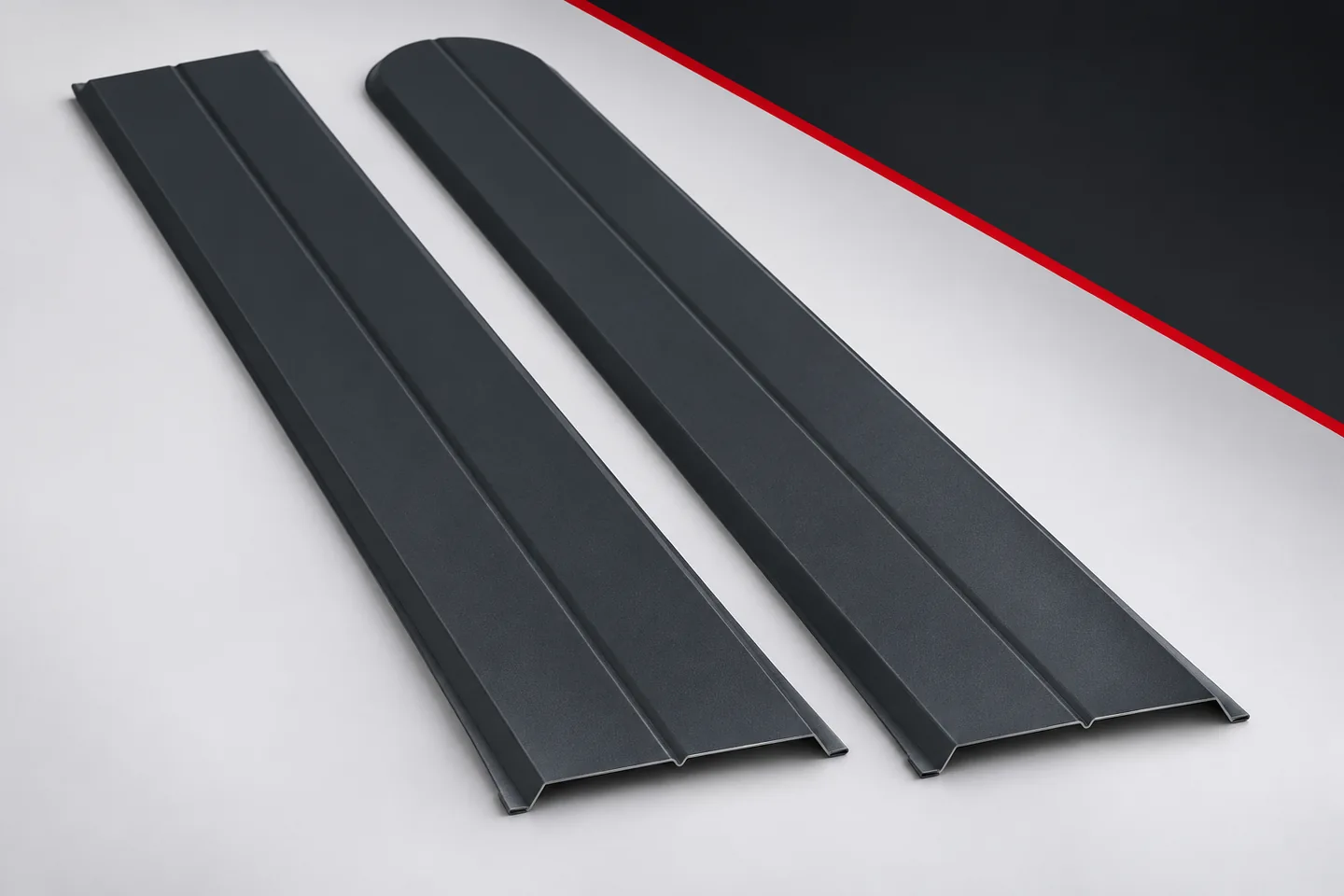
The type of top end also affects the appearance of the line. Straight and rounded ends give a different effect. If caps are used, their compatibility and how they are accounted for in the dimension must be checked. Metal fence pickets should be described so that the installer does not have to add or subtract an unspecified height themselves.
Trial-fit the most difficult section
It is worth checking the layout at the largest height change, corner or gate. These are the places where incorrect interpretation is most visible. A trial layout can help assess the rhythm and the end. However, it should not require bending profiles or making random holes.
After acceptance, close the version of the drawing and the list. If the terrain or the structure changes later, return to dimensioning. A loose message about shortening a few elements is not a good substitute for an up-to-date table. One consistent version of the data should go to the supplier and the installer.
Make collection and issuing of components easier
Ask for a clear division of packages according to the agreed groups. On site, keep the markings and the order. With similar lengths, elements are easily confused, so it is not worth mixing the entire delivery straight away. The check should cover both the totals and the specific dimensions.
A variable line of metal fence pickets can organise a fence well on uneven terrain or give it a specific character. However, it requires more careful preparation than a single repeated dimension. The drawing, the sequence of lengths and consistent support allow the intended effect to be achieved without improvised cutting of the entire batch.
Order additional pickets as deliberately selected lengths. A random stock of one dimension may not fit the key item on the curve. It is worth linking the reserve to the actual groups and the method of any replacement.
7 branches. Materials closer to your project.