Metal fence pickets and fences
A fence picket sample before purchase: what to check beyond colour?
A sample is one of the most useful elements when choosing a fence. It shows more than a photograph, but it also has limitations. A short section does not prove how a long picket will behave within a bay. It is therefore worth using it for the right tasks. Checking the colour, geometry, reverse side and finish helps you order metal fence pickets that meet expectations. The material should correspond to the offer, not just to the general product family. Check the profile, coating and finish designation. If a sample of a different variant was shown, note that difference. A similar colour should not be treated as confirmation of all the properties of the picket being ordered.
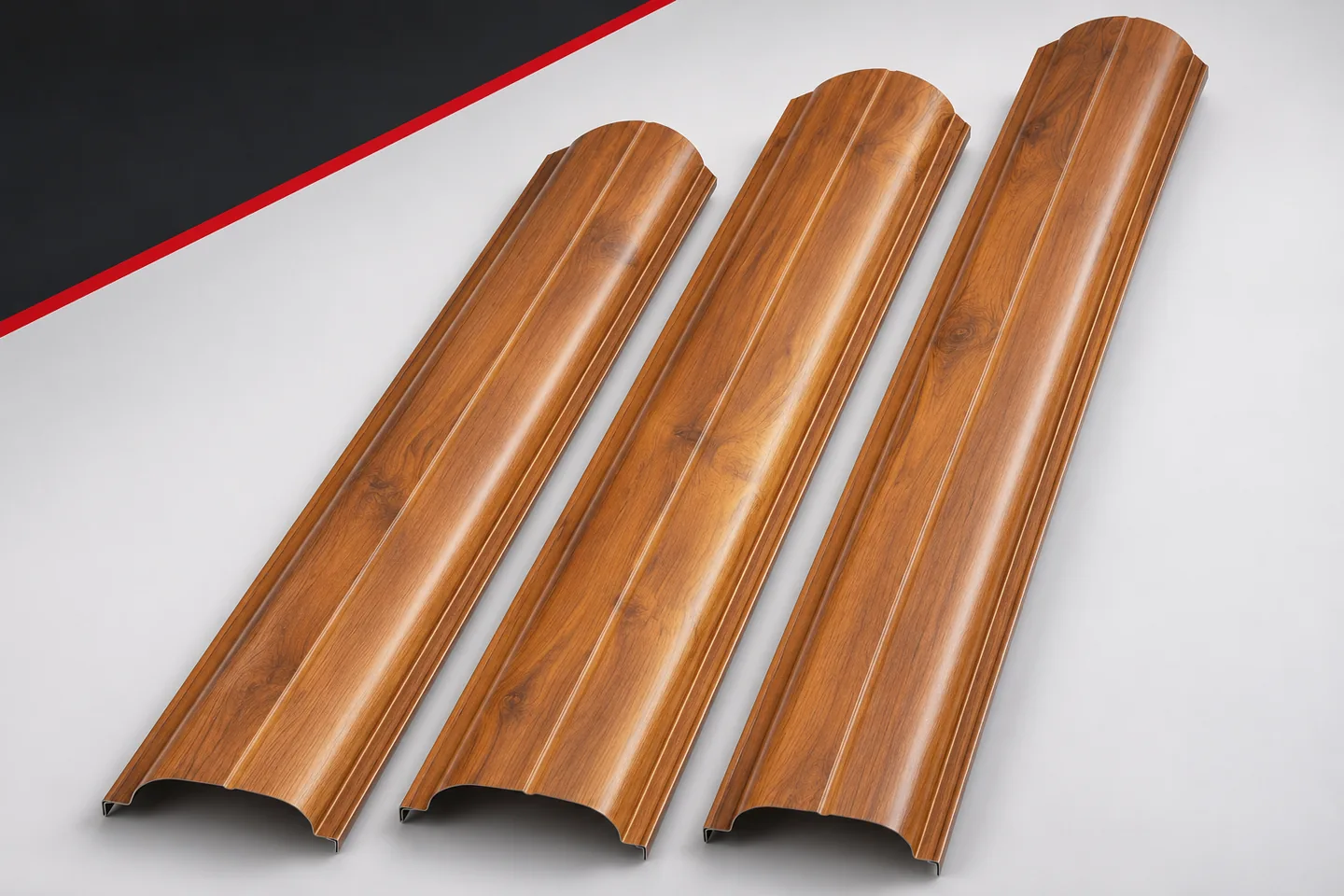
Ask for a sample of the proposed variant
It is helpful when a product data sheet is included with the sample. It allows the appearance to be linked to the specifications. Metal fence pickets may have a similar front but a different cross-section or back. A brief note that ‘this is how the fence will look’ is too vague if it is not clear exactly which material has been shown.
Examine the actual profile geometry
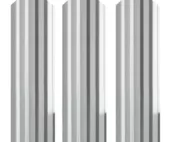
Check the run of the embossings, the edge folds and the depth. Pay attention to the view at an angle. This is often what reveals the difference between a wide front and a thin wall of material. The sample helps you understand the construction of the picket and not expect it to look like a solid board or a massive bar.
Do not judge the entire load-bearing capacity by bending the sample in your hand. A long element and a short section work under different conditions. Correct selection requires documentation, support and a defined installation. The sample is a tool for assessing appearance and execution details, not a universal structural test.
Check the reverse side and the edges
Turn the sample over and see what the back looks like. In a single-sided decorative version, it may have a technical coating. This does not automatically mean exposed steel, but it affects the view from the garden side. If you want a similar finish on both sides, confirm the appropriate variant in the order.
Look at the type of end finish and any cover piece. Not every detail suits every cross-section. It is also good to see an example of the connection to the support. This allows you to assess the visibility of the fasteners and how the entire assembly is finished. The front sample alone does not explain these features of the finished fence.
Compare the colour on site
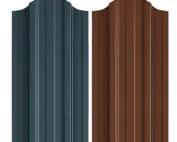
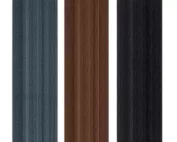
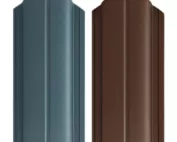
Compare the material with the existing façade, gate or roof if they will be viewed together. Check it in natural light and from different distances. Gloss and profiling create reflections that a small patch of colour on a screen does not show. It is worth seeing the sample in the planned installation orientation.
You do not have to aim for identical elements throughout. A deliberately chosen contrast can also be coherent. What matters is that the decision is based on a real side-by-side comparison. When extending a fence, compare the new sample with the cleaned old surface. Dirt can make it harder to judge whether the shade matches.

For the decorative finish and gaps, look at a larger section
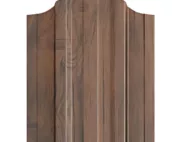
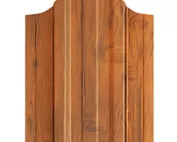
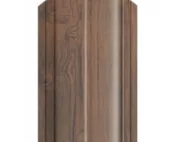
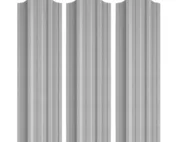
A small sample of a wood-effect surface may show only an attractive fragment of the pattern. Several pickets side by side give a better impression of the rhythm of the decor. The same applies to the arrangement of the gaps. A single profile does not show how the privacy screen will look once the whole row is installed.
If you are planning two rows, it is worth looking at a three-dimensional sample with the correct offset. A photograph from one angle does not show all viewing directions. Metal fence pickets produce different effects depending on their arrangement. Assessing a larger section helps you choose a layout without promising complete opacity.
Note down what has been approved
In the agreement, state the profile, colour, texture, gloss and finish of the back. Add the sample reference and the date. If some characteristics remain to be confirmed, state this clearly. This way, acceptance will not be understood as agreement to everything that later appears in the delivery.
Do not treat the sample as a substitute for the full specification. Production dimensions, quantity, fixings and conditions of use still need to be recorded. A good decision combines inspection with documentation. Each of these parts answers different questions and helps you check that the order matches later on.
If the sample is only meant to show the colour, state this clearly. It may be made from a different sheet thickness or have a different shape from the target profile. This limitation does not make it useless, but it prevents wrong conclusions. To assess the geometry, you then need to look at a separate, correct component.
Keep the sample for acceptance
Store it so that it does not get scratched or dirty. On delivery, compare the material under similar lighting conditions. Do not assess the batch through film or on the basis of photographs with different settings. Describe any discrepancy before installation and clarify it with the supplier.
A metal fence picket sample is useful when it is clear what it represents. It helps avoid a mistake in appearance and understand the product better. It does not on its own confirm all technical parameters. Combining the sample, the data sheet and a clear order gives a much better basis for choice than the colour name alone.
If you change the coating or profile after acceptance, return to this stage. The previous sample may no longer represent the material being ordered. Such a change should also be recorded in the quote and the final summary.
7 branches. Materials closer to your project.