Insulation and ventilation
Comparing insulation materials for a roof
Choose roof insulation to suit the project. A new flat roof and a pitched roof being renovated offer different places for insulation. In a pitched roof there may be room between or below the rafters, or for a continuous layer over the structure. In a flat roof, consider the position of the insulation in the build-up and the pressure it must withstand. Compare declared thermal conductivity and mechanical properties in the context of the complete roof section. PIR boards, mineral wool, XPS and EPS each suit particular conditions.
Where to start when choosing insulation?
Determine whether the roof is pitched, flat, being renovated or new. Check where the insulation can be placed: between the rafters, below them, above the structure or within the layer build-up of a flat roof. Each location imposes different requirements. A material compressed by the roof layers must have suitable mechanical properties. Filling between rafters requires a different method of support.
It is also worth defining the moisture conditions and fire requirements. A roof over a heated room performs differently from the covering of a cold shelter. The layer design is created first, and then the product is selected. Buying a thick board without checking the facing and compatibility with the waterproofing can make installation difficult. Thermal insulation is not a substitute for a tight covering.
What does the low lambda of PIR boards provide?
Lambda describes heat conduction through a material. At the same thickness, a lower value means greater thermal resistance. The resistance of a layer is calculated as its thickness in metres divided by lambda. For an example board with a thickness of 0.10 m and a lambda of 0.022 W/(m·K), the result is approximately 4.55 m²K/W. This is a parameter of this layer, not the U-value of the entire roof.
To achieve a similar resistance with a material with a lambda of 0.034 W/(m·K), approximately 15.5 cm is needed. With a lambda of 0.040, this will be approximately 18.2 cm. These are example comparisons, not fixed values assigned to all EPS or mineral wool products. The advantage of PIR is particularly useful where construction height is limited. The result must be calculated from the data of the specific product.
When should PIR be compared with EPS and XPS?
EPS is available in many grades with different lambda and strength. It can be a reasonable choice in a designed flat roof if the layer thickness and the loading method allow it. Not every EPS board is suitable under the same layers. The intended use, dimensional stability and compatibility with materials used during bonding or waterproofing must be checked.
XPS is considered, among other things, in systems requiring moisture and compression resistance, including appropriately designed inverted roofs. PIR should not replace it solely on the basis of a more favourable lambda. The operating environment of the entire board together with its facing is decisive. Low water absorption of the core is not permission for permanent moisture penetration of any product or its joints.

Where can mineral wool have advantages?
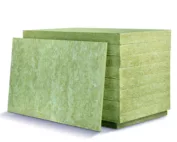
Mineral wool can be a good choice when fire and acoustic requirements are important. The specific properties depend on the product and the assembly of the building component. Flexible products are easy to fit between timber frame members, but they do not replace rigid boards intended for loaded roofs. The material name alone does not say where it may be used.
PIR is not a non-combustible material. The reaction-to-fire class of an individual product should not be transferred to the fire resistance of the entire roof. Similarly, good thermal insulation does not automatically mean good protection against rain noise. Mass, connections, facings and the method of support all matter. Where sound or fire are critical, tested systems are compared.
How to avoid thermal bridges and moisture problems?
A continuous layer above the rafters can reduce thermal bridges created by the timber. However, it requires appropriate fixing of the entire system and correct details at the eaves and walls. The boards must be properly fitted and the joints made in accordance with the system. The presence of an aluminium facing alone does not automatically create an airtight layer. Its continuity also depends on joints and penetrations.
On the interior side, a layer with the appropriate diffusion resistance and airtightness is needed. The outer layers must ensure safe moisture removal. A wet roof structure should not be sealed between materials of high diffusion resistance without an assessment of the design. If the roof has been damp, the cause and the method of drying are established first, and only then is the new insulation installed.
How to compare the cost and parameters of a complete solution?
Compare systems that provide similar thermal resistance, taking thermal bridges and the other layers into account. The price per cubic metre of different insulations says little about the cost of the finished roof. Add the battens, fasteners, tapes, labour and the effect of thickness on flashings. Thinner insulation may simplify some details, but the entire assembly must be checked.
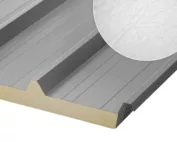
In product data sheets, pay attention to long-term parameters. The stress at 10% deformation is not a permissible permanent service load. Nor should a PIR insulation board be equated with a load-bearing sandwich roof panel. Choose the material for the specific role. A well-insulated roof is determined jointly by calculations, continuity of insulation, moisture control and correct workmanship.
7 branches. Materials closer to your project.