Choosing the covering
Four things to check when choosing tile-effect metal roofing
Before comparing prices for tile-effect metal roofing, check the chosen model’s installation instructions against the slope of your roof. Then compare the sheet material and coating, the size of the sheets, and the cost of the complete order including flashings and fixings. Colour is a design choice, while suitability has to be established from the technical data. For a roof with several intersecting slopes, ask for a cutting layout to see how much sheet will be left over. Review the drawings and specifications with the designer or installer before ordering.
Criterion 1: does the covering suit the roof geometry?
First check the roof pitch and the requirements of the chosen model. There is no single minimum angle for all tile-effect metal roofing. Sheet lengths, joints and details also matter. On a low-pitch roof, an accidental increase in the number of overlaps can change the conditions of use. The product selection should be confirmed by the designer or contractor on the basis of the documentation.
Count the roof valleys, corners, windows and penetrations. On simple roof slopes it is easier to use long sheets cut to size. With complicated geometry, it is worth checking the modules and the actual waste. The structure and support are also assessed. Lightweight steel sheet does not remove the obligation to check the old roof truss. The battens must be matched to the specific profile, and the eaves must be made in accordance with the system.
Do not order the covering solely on the basis of the area given in the house design. Confirmed dimensions are needed for production, and a complete set of details is needed for the quote. Before purchase, establish who is responsible for measurement. A difference of a few centimetres at the end of a roof slope may require a change of flashing or of the entire sheet.
Criterion 2: what is the sheet made of and how is it protected?
The offer should include the thickness of the steel core, the type of metallic coating and the organic finish. The term coated steel sheet alone is too general. Steel thickness should not be compared with the thickness of the whole product measured together with the paint. It is worth asking for the data sheet of the specific variant, because one profile may be available in several standards.
The coating is selected for the environment and the expected appearance. Corrosion resistance and UV resistance are separate characteristics. Matt is not automatically more durable than gloss, and a higher number of micrometres does not settle every difference. In a demanding environment, confirmation of the material’s suitability is needed. This also applies to the underside of the sheet and the humidity conditions under the roof.
Read the scope of the warranty. Protection against perforation does not mean an identical commitment regarding colour. Check the maintenance requirements, exclusions and any registration procedure. The number of years stated in the advertisement is not the expected durability of the entire roof.

Criterion 3: which format makes transport and installation easier?
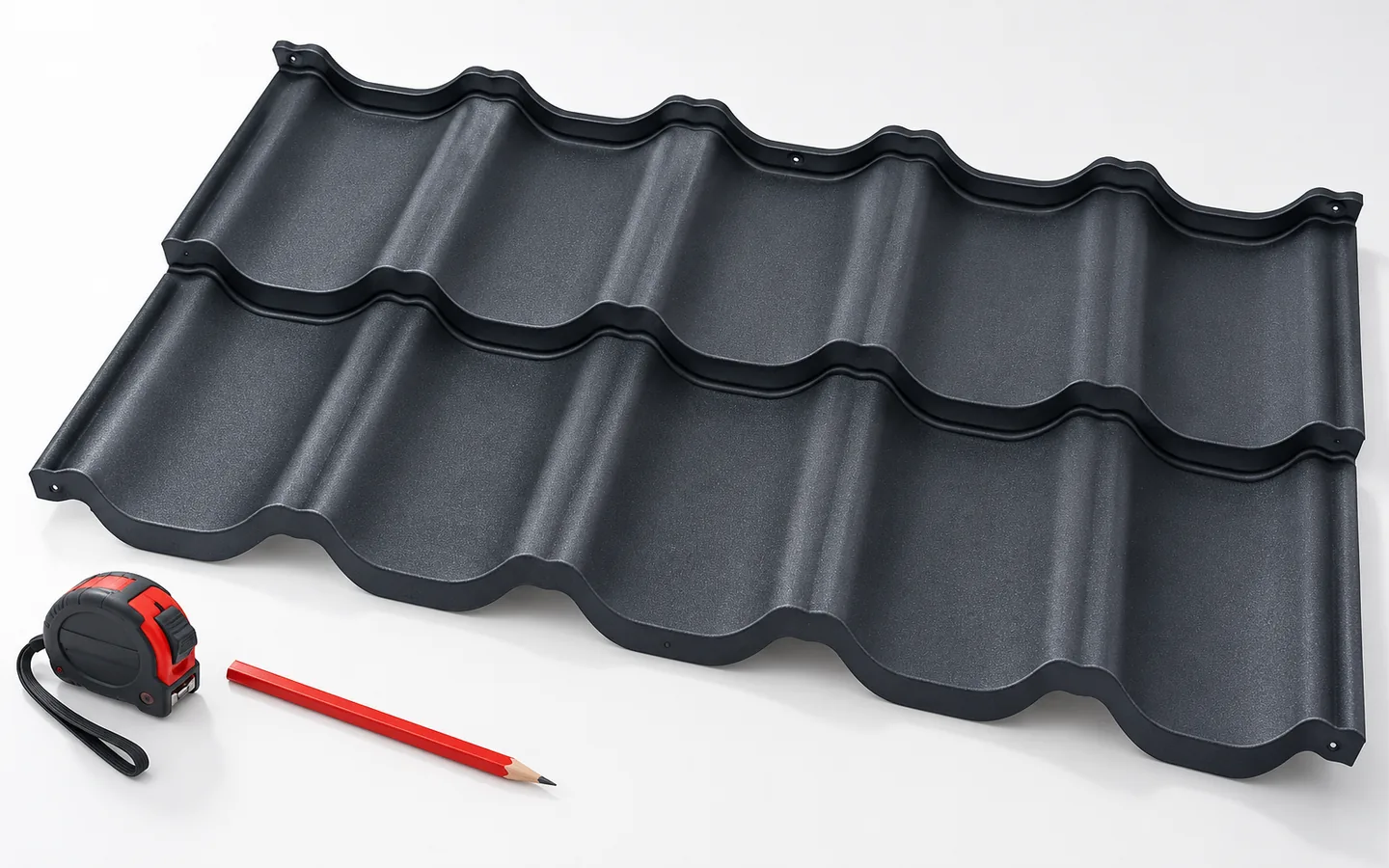
Modular tile-effect metal roofing consists of small sheets with a defined joint geometry. They are easier to move onto a cramped plot or to pass onto the roof without handling a very long element. The cut-to-length version allows transverse joints to be reduced on a regular roof slope. However, a long sheet requires an appropriate number of people, support during lifting and space for unloading.
Waste is not assessed on the basis of the modular label alone. The profile direction and the cutting layout can limit the use of offcuts. Ask for the sheet layout on the actual roof plan. Also ask about the possibility of reordering and the availability of flashings. A similarly looking module from another series does not have to match the one installed earlier.
Agree the format with the team before purchase. The installer should know the instructions, the method of joining and the layout of the first row. Experience with another tile-effect metal roofing does not exempt you from reading the documentation for the new model. Differences in the end details can affect the entire installation sequence.
Criterion 4: what does a complete, installed roof cost?
Establish the unit of price. A total square metre includes material used for laps, while an effective square metre describes the covering area. Modules may be priced per piece. Compare amounts converted to the same basis. Then add the waste resulting from cutting. A low rate shown in the price list does not always mean the lowest order cost.
A full breakdown includes flashings, fasteners, seals, ventilation and transport. Layers under the covering, drainage, access and labour are added. Check whether both quotes include the same works. An omitted cost or roof window can make one quote appear lower. Also establish unloading and the cost of later replenishment of the delivery.
With a limited budget, it is worth comparing a less complicated geometry or a different format. Do not save by using random substitutes for screws and seals. Their share in the price is small compared with the cost of removing a leak and replacing wet insulation.
How to check an offer before placing the final order?
Ask for the recorded model, coating, colour, steel thickness and quantity of material. Attach the sheet plan and the list of accessories. View a sample in daylight and agree the details with the roofer. Check the storage conditions, the installation date and the procedure for damaged deliveries. An order prepared in this way reduces the number of assumptions on site.
On delivery, compare the labels with the documents. Keep the batch data and take photos before work begins. The four criteria should lead to one coherent decision: the covering is technically suitable, has the necessary protection, can be installed efficiently and fits within the full budget. Only then does the choice of colour and texture complete the purchase.
7 branches. Materials closer to your project.