Choosing a covering
Metal shingle roofing or tile-effect sheets: how do they differ?
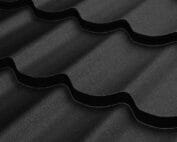
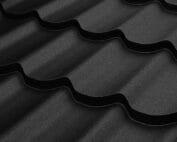
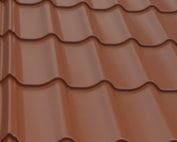
Shingle-effect metal roofing uses profiled steel to reproduce the pattern of overlapping timber shingles. It is available with a coated or stone-coated finish. To choose a system, check the data sheet and fitting instructions for the particular profile. The name alone tells you little about steel thickness, effective cover width or how the joints keep out rain. Check the permitted pitch, batten spacing and support at the eaves, and leave room for flashings around roof windows and chimneys. Compare those details alongside the appearance when choosing between shingle-effect and tile-effect sheets.
What does ‘shingle-effect’ mean on a metal roof?
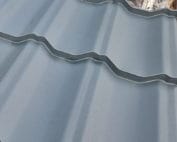
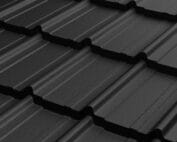
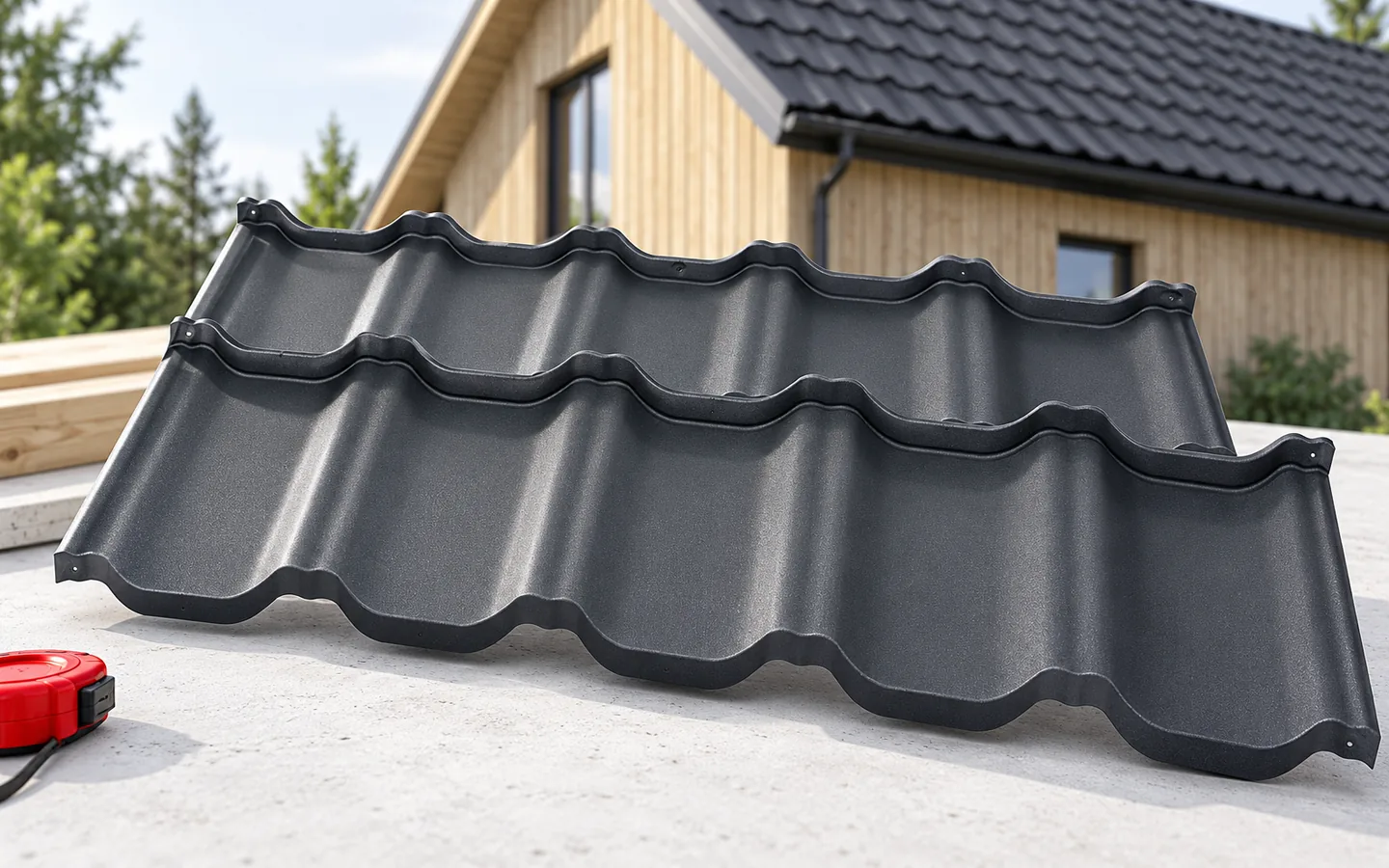
The shingle effect is a surface pattern. The pressing in the sheet recreates the outlines of small pieces of timber laid in overlapping rows. The sheet itself contains no wood. Each steel product has its own protective layers and may have a smooth coating or a granular stone finish. The finishes look different and may require different care.
The term ‘shingle-effect’ does not specify the steel thickness, effective cover width or performance of the joints. Products sold under this name do not all share one technical specification. Read the data sheet and fitting instructions for the model you intend to buy. Two products may look alike in photographs but have different profiles, so colour alone is a poor guide when selecting flashings.
Which buildings suit a small-scale shingle pattern?
Small shingle courses can complement timber details, stonework and traditionally proportioned buildings. They also change how a large, unbroken roof slope looks. The building need not reproduce every feature of a regional style. What matters is how the pattern works with the façade, the windows and doors, and the shape of the eaves. View the sample in daylight.
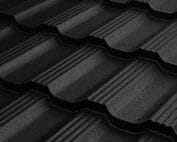
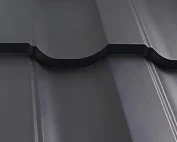
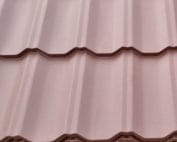
Modular tile-effect sheets with a distinct, regular profile can give a similarly fine pattern without imitating timber. On a simple roof slope, tile-effect sheets cut to length are another option. Judge the covering from the distance at which people will see the finished roof. A detail that stands out on a sample in your hand can disappear high above street level.
What does profiled steel offer as a roof covering?
Profiling gives steel sheets stiffness while keeping them relatively light. That can matter when reroofing an existing building, but the roof structure still needs checking. Allow for the other roof layers, snow and installed equipment as well as the covering itself. Damaged rafters still need repair even if the replacement covering is light.
Standard module sizes make deliveries and installation easier to plan. A roofer can handle a small module around a dormer more easily than a long sheet, but there are more joints to form. The roof shape and the crew’s experience both affect the time needed. A realistic installation estimate also takes access to the roof into account.

What should you check in the fitting instructions?
First check whether the roof pitch falls within the range specified for the chosen profile. Then check the batten spacing, the support at the eaves and how the modules are fixed. The stamping can dictate where each course starts. Allow space for flashings around roof windows and chimneys. Fitting instructions for a tile-effect sheet do not automatically apply to a shingle-effect profile.
Use sheets and modules from a compatible system. Do not try to make a panel from a different system interlock by bending its edge. Choose a cutting method suitable for the coating and remove metal filings from the roof. Plan snow retention and roof access separately. A textured finish does not replace either provision.
Does the shingle pattern affect insulation or rain noise?
The shape of the outer steel sheet does not replace thermal insulation. Winter comfort depends on the resistance of the layers, thermal bridges and airtightness. The loft can be insulated with PIR boards or another suitably selected material. With PIR, an advantage can be achieving the required resistance in a thinner layer. However, the joints between boards and the connections to surrounding building elements must be resolved.
The same applies to the sound of rain. Texture or aggregate can influence the behaviour of the surface, but the effect inside depends on the whole roof. Insulation, linings and the method of support are important. If noise is a priority, data for the assembly must be sought, not just the trade name. Mineral wool can be an important element of an acoustic solution that a PIR board alone cannot provide.
Shingle-effect sheets or modular tile-effect roofing?
Compare samples, technical documents and itemised quotations for the same roof slope. Check the effective cover area, the expected offcuts and the cost of the matching flashings. Ask whether accessories and replacement parts are likely to be available for later repairs. Find out whether the roofer has worked with the particular profile. Familiarity with the system helps when assessing awkward details.
Choose the shingle pattern if that is the look you want for the roof. If a regular profile and a matt finish are more important, modular tile-effect roofing may suit the building just as well. Once battens are in place, check the dimensions before switching products. A change at the ordering stage may mean revising quantities and roof details as well as the product name on the quotation.
7 branches. Materials closer to your project.