Metal fences
How sheet metal fence panels work and where they fit
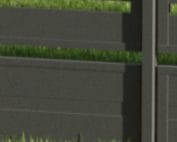
A fence made of sheet-metal panels makes sense when a screen of ready-made bays or sheets fixed to a structure is needed, rather than an open mesh or individual pickets. Before buying, check how the posts, foundations and rails have been matched to the specific infill, because a larger screen area reacts more strongly to wind. Also inspect both sides of a bay, since rails and fasteners are often more visible from inside the property. Bear in mind that full sheet metal reduces airflow and shades a strip of greenery, and its acoustic effectiveness depends on the tightness, height and position of the barrier.
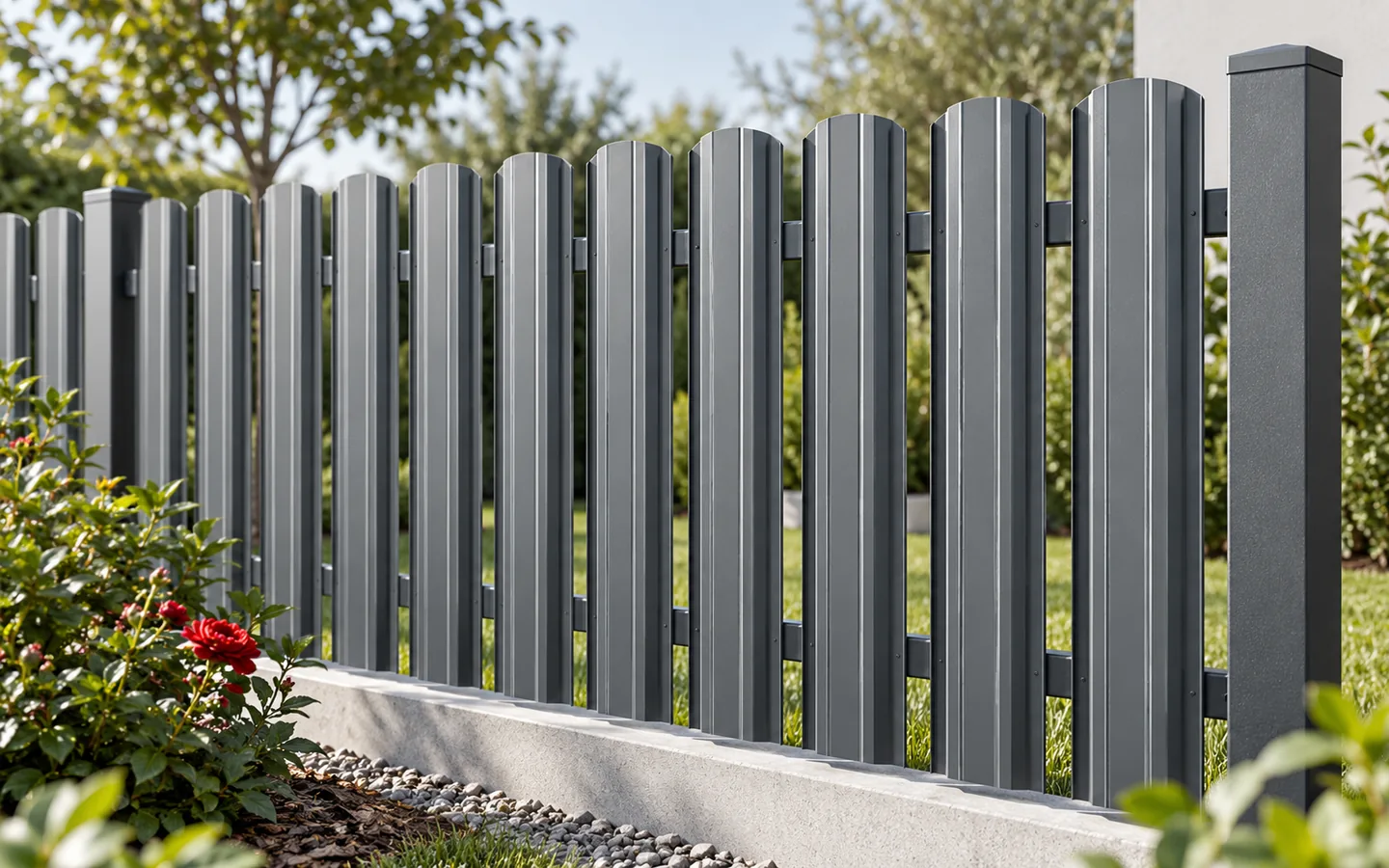
What does panel mean in sheet metal fencing?
The word panel describes a finished element or a repeatable section of fencing. It does not determine the material or the degree of openness. A wire panel is open. A sheet metal infill may be solid, profiled or made up of separate parts. The actual cross-section and the method of connection to the structure must therefore be checked in the offer.
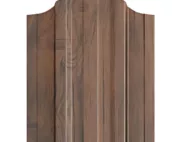
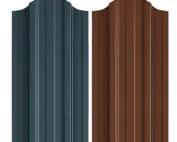
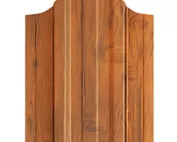
Steel pickets allow gaps to be set more freely. A trapezoidal sheet forms a more continuous screen. Both solutions can look good, but they behave differently under wind load. It is not worth choosing them solely on the basis of a similar colour. The area through which air can flow is what matters.
Before purchase, ask for a view of both sides of the bay. Rails, fastener heads and the finish of the underside are often more visible from the garden. If this side is to be representative, it should be taken into account when choosing the system, not only after installation is complete.
When is a fuller screen beneficial?
Sheet metal infill restricts the view from the street and can separate a utility area of the plot. It is useful where bins are located nearby, materials are stored or a work area is situated. Privacy, however, is assessed from various directions. Gaps visible at an angle may remain even in a seemingly tight arrangement.
A full screen changes the conditions in the garden. It can restrict airflow and shade a strip of vegetation. In a confined space, it is worth checking whether it will overwhelm the plot. Sometimes a combination of a solid section facing the street with lighter pickets in the further part of the property works better.
A specific sound reduction should not be promised on the basis of the presence of sheet metal alone. Acoustic effectiveness depends, among other things, on the tightness, height and position of the barrier relative to the noise source. An ordinary fence does not become an acoustic screen merely because it blocks the view.

Why does wind determine the construction?
Wind presses on the surface of the bay and transmits forces through the rails and posts to the foundations. The more solid the infill, the more important it is to check this system. The height of the fence, the spacing of the supports and the surroundings all matter. An open plot may place different demands than a sheltered courtyard.
An old wire panel should not be covered with a sheet of metal without assessing the structure. This changes the load, even though the posts remain the same. Additional screws will not solve the problem of an insufficiently strong foundation. Filling in a gate requires similar attention, as it affects its hinges and drive.
The fixing of the sheet itself must also be properly selected. Excessive support spacing encourages vibration and deformation. Flatness of the sheet should not be forced by over-tightening. The profile geometry, material thickness and the arrangement of the rails should form a coherent whole.
How to ensure durability and easy repair?
The coating should match the conditions of use, including on the property side. Near the ground there is splashing, deposits and longer-lasting moisture. The lower edge should be designed so that soil and plants do not accumulate against it. Accidental contact with aggressive paving cleaning agents can damage the surface.
Sheets and flashings are cut with the correct tools, and swarf is removed immediately. Connections must be protected in accordance with the system. At the time of purchase, it is worth establishing the possibility of replacing a single bay or a section of infill. A large panel is repaired differently from a single metal picket.
It is worth keeping the profile designation, colour and material specification. A replacement sheet should match in geometry. A similar appearance from a distance is not enough. A small stock from the same batch can facilitate repair, although it does not eliminate the difference resulting from natural ageing of the surface.
What should you calculate before ordering fence bays?
Set out the lengths of the sections, the corners, the ground slopes and the positions of the gate and pedestrian gate. Determine the post width and the actual space for the infill. For sheets, allow for the cover width, not just the overall dimension. On a sloping plot, the way the top and bottom lines of the fence are run must be chosen.
A joint quote should cover foundations, structure, infill, fixings and edge finishing. Also check transport and the possibility of unloading long elements. The difference between a cheap sheet and a complete bay can be considerable. Only a full schedule shows the actual cost of screening the plot.
Before implementation, it is worth approving a single trial bay. This allows the shade, rigidity and visibility of the fixings to be assessed. A sheet metal fence makes sense when the required screening matches the structure and the surroundings. It does not have to be completely solid along every section to fulfil its function well.
7 branches. Materials closer to your project.