Gutters and drainage
Steel or PVC gutters: what to check before choosing
The choice between steel and PVC gutters depends primarily on drainage capacity, not on the material alone. Before deciding, check the roof area assigned to each outlet, the roof pitch, the eaves length and the downpipe positions. In both systems, the fall, bracket spacing, expansion joints and patency are key. Steel stands out for its rigidity, while PVC offers low weight and resistance to material corrosion; plastic reacts more strongly to temperature in terms of dimensions. Leave the final layout to the designer.
What does drainage capacity depend on?
First, the roof area assigned to a given outlet is determined. The pitch, the length of the eaves and the position of the downpipes also matter. Two roofs with a similar footprint may need a different layout. Water concentrated in a roof valley loads a section of the gutter differently from an even flow from a straight roof slope.
The gutter material does not replace the selection of the cross-section. A steel gutter that is too small will overflow just like a plastic gutter that is too small. The performance tables of the chosen system and the way the outlets are connected must be checked. The further management of rainwater is also important. A clear pipe will not help if its outlet is blocked or directs water under the foundation.
What are the characteristics of steel gutters?
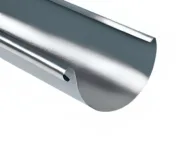
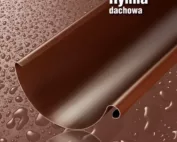
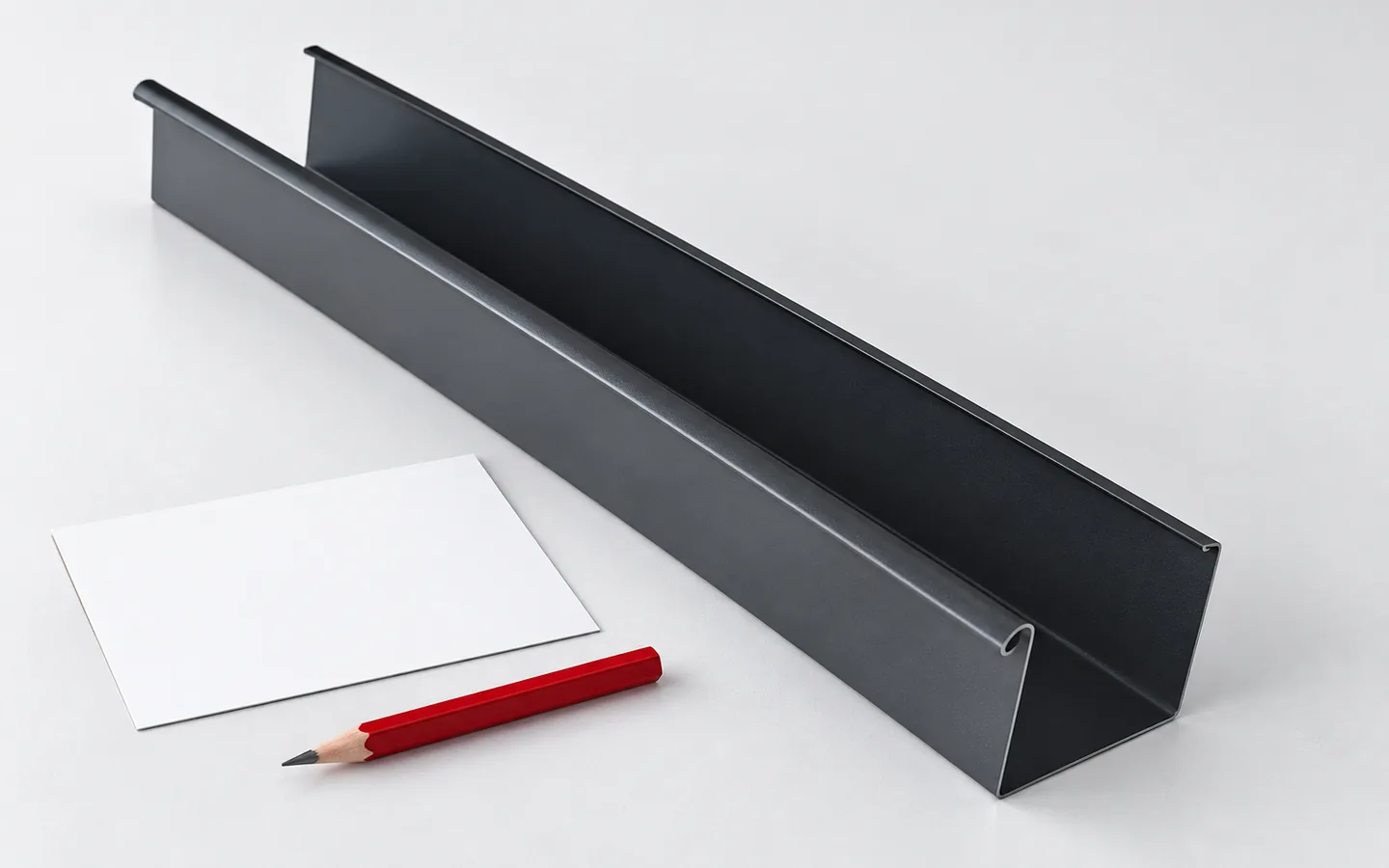
A steel system retains its shape well if the components are properly supported. Coatings protect it against corrosion and give it colour. Durability depends on their quality and on the conditions of use. Attention should be paid to cut edges, scratches and contact with materials that may adversely affect the metal.
Tools in accordance with the instructions are used for cutting. Cutting that generates strong heat can damage the surface protection. Removing swarf is equally important. Steel expands and contracts with temperature changes, though usually to a lesser extent than PVC. The required expansion solutions must not be omitted just because the gutter is metal.
What speaks in favour of PVC gutters?
Plastic does not corrode like steel and has a low weight. This makes transport and installation easier. However, it does not mean full resistance to every load. The correct spacing of the hooks and the fixing of the corners remain necessary. The material should be used within the range of conditions intended for the specific system.
PVC changes length with temperature. Connectors and installation markings help maintain the necessary clearance. A gutter that is fixed too rigidly may deform or load the connections. It should also not be assumed that all plastic systems are installed with adhesive. The method of connection results from the design of the given product and its instructions, not from the type of material alone.

Which installation errors harm both systems?
The gutter must collect water from the eaves without excessive exposure to sliding snow. Its position is determined together with the gutter apron and the edge of the roofing. Incorrect positioning can cause water to run behind the gutter. Conversely, an incorrect fall will leave standing water despite an adequate outlet diameter.
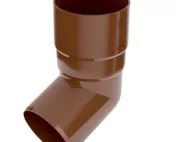
Hooks, connectors and end caps from different systems should not be mixed at random. Similar nominal dimensions do not guarantee a tight fit. Gaskets must sit cleanly and without twisting. When installing downpipes, stable brackets and thermal movement must be allowed for. Adding extra sealant is not a good way to make mismatched parts fit.
How to compare appearance and costs?
Check the price of the whole system, not just a section of gutter. Corners, outlets, pipes, bends, hooks and connectors account for a significant share. An unusual roof shape can change the price difference between variants. It is also worth checking the availability of spare parts and the possibility of extending the drainage after adding a terrace or carport.
The colour is chosen to match the roofing, façade and soffit. Samples of different materials may have a different gloss despite a similar colour. On a house without eaves, the system is often highly visible and sometimes partially concealed. In that case, not only the proportions matter but also access for inspecting the connections. Concealing the gutter should not remove the ability to clean and repair it.
In the cost estimate, also include cleaning pieces, rainwater gullies or other specified connection components. Not every building needs the same set. It is worth checking where the lower section of the pipe can be conveniently inspected after it is blocked by leaves.
What needs to be checked during use?
Remove leaves and check that the outlet and downpipe are clear. After strong wind, it is worth inspecting the hooks and corners. In winter, ice should not be forcibly torn from the gutter. If problems recur, the cause of water or snow accumulation must be found. Simply installing a stronger material does not always solve a faulty layout.
Assess traces of overflow on the façade and the condition of repaired areas. On a steel gutter, look for damage to the coating; on a plastic one, for cracks and deformation. In both, check the connections and gaskets. The best system is one whose capacity matches the roof, whose details are correctly assembled, and whose subsequent maintenance does not require dismantling the façade.
7 branches. Materials closer to your project.