Installation and details
What makes standing seam roofing panels easier to install?
Whether installing snap-lock seam panels will be straightforward depends above all on the system matching the actual substrate and roof geometry, not on the factory-formed seam alone. Check that the substrate is level and stable, that thermal movement of the metal is allowed for, and that details at the eaves, ridge and penetrations are complete. Snap-lock panels and traditional standing seam are different solutions, so instructions, minimum pitches and accessories should not be transferred between them without confirming compatibility. The simple appearance of the covering demands high accuracy, because unevenness is easily revealed in the light.
How does a snap-lock panel differ from a traditional standing seam?
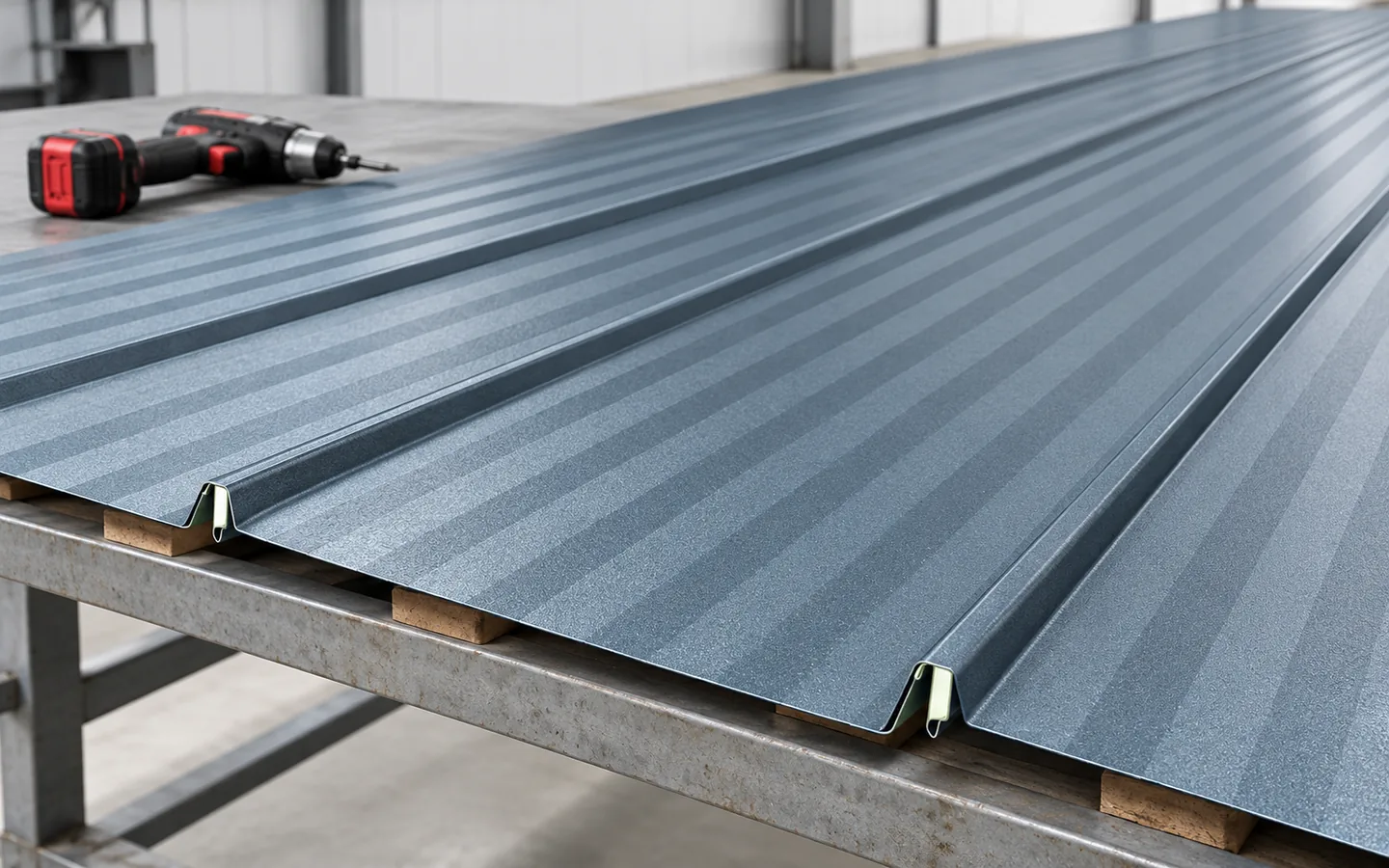
A traditional standing seam is formed by folding and closing the sheet edges appropriately. A ready-made snap-lock panel has a factory-formed joint. These are different solutions, although from a distance they can create similar vertical lines. Instructions, minimum pitches and accessories should not be transferred between them without confirming compatibility.
Factory preparation can reduce some operations on site. The installer must still lay and fix the panel correctly. The installation direction and edge alignment are important. An audible click alone does not confirm that all layers are correct. Eaves, ridge and penetration details remain a separate task.
Why is the substrate so important?
Long, relatively flat covering areas make irregularities visible. The substructure or decking should meet the requirements of the specific system and form a stable plane. It must not be assumed that every panel can be installed on the same substrate. Support spacing, separating layers and ventilation are important.
An uneven element underneath can cause local stress and a change in light reflection. Trying to pull the panel down with additional screws does not always help. It can block material movement and worsen the effect. The substrate should be checked before covering. Correction at this stage is usually simpler than later dismantling of the finished roof area.
How do you allow for thermal expansion of the sheet?
Metal changes dimensions with temperature. The fastening system should allow the movement intended for the panel length and roof conditions. The instructions specify the fixed points and how the other connections work. The element should not be blocked by random additional fastenings simply because it seems too loose.
Long panels also require appropriate handling. Bending or twisting the edges makes later joining of the seam more difficult. Unloading should be organised with the right number of people and equipment. A convenient connection system does not protect the material from transport damage. The sheets should be checked before they are brought onto the roof.

What actually speeds up the work?
Repetitive geometry, prepared fastening points and matched accessories help maintain the installation sequence. The benefit is greatest when the roof has been measured correctly. On a simple roof area, successive elements can be laid efficiently. At chimneys and roof valleys, precise cuts and flashings are still required.
The complete set of materials matters just as much as the lock itself. A missing correct eave finishing element can force a break or unnecessary improvisation. It is worth preparing a laying plan in advance, especially when the last panel will be cut. The arrangement of the seam lines affects the appearance of the entire roof, not just the first section.
What mistakes should be eliminated?
Incorrect pressure of the fasteners, blocking of movement and damage to the lock can impair the performance of the covering. It is also necessary to avoid cutting that overheats the coating and leaving swarf. The choice of tools should correspond to the material instructions. Damage should be assessed and repaired using the correct method, rather than painted over with any preparation.
Penetrations for installations and the subsequent mounting of equipment require particular attention. A clamp for one type of seam does not necessarily fit another. A photovoltaic installation requires checking the entire load transfer path. The absence of a hole in the sheet does not automatically mean there is no risk to the seam or the substrate.
When should you choose this type of covering?
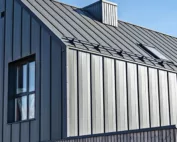
Standing seam is well suited to simple forms and clear roof slope lines. However, the choice should take into account the pitch, the required substrate and the experience of the team. It is worth comparing the full cost with modular tile-effect metal roofing or trapezoidal steel sheet. Aesthetics are important, but different materials may require a different scope of roof preparation.
Before deciding, inspect a larger section of the covering in natural light. Ask about permissible visual phenomena and acceptance rules. A simple appearance does not always mean the simplest execution. A good result comes from combining the right system, an even structure and careful installation. Factory aids help the professional, but do not replace their work.
It is worth keeping the panel model and information about the fastenings in the documentation. For later mounting of accessories, this allows a compatible detail to be selected. The description ‘standing seam roof’ alone is too general for safe identification of the solution.
7 branches. Materials closer to your project.