Choice of covering
What changes when you choose trapezoidal steel sheet instead of tile-effect metal roofing on a new house?
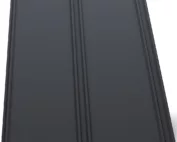
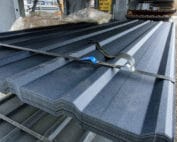
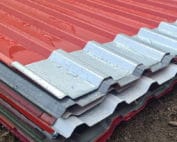
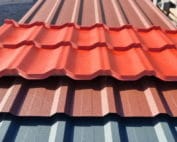
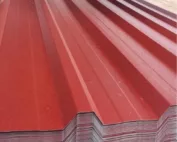
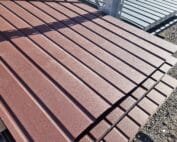
Trapezoidal steel sheet can suit a house just as well as tile-effect metal roofing if the design accounts for it. The difference does not end with appearance. Both coverings have different geometry, support and details. It is worth comparing them before installing battens and flashings. A later change may require more work than the difference in sheet price suggests. Trapezoidal sheet forms continuous lines running in the direction of the roof slope. Tile-effect metal roofing adds a transverse division that resembles rows of tiles. Flat modular versions give yet another effect than traditional waves. It is therefore worth comparing specific profiles rather than two general material names.
How does the profile change the appearance of the whole building?
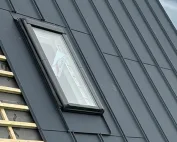
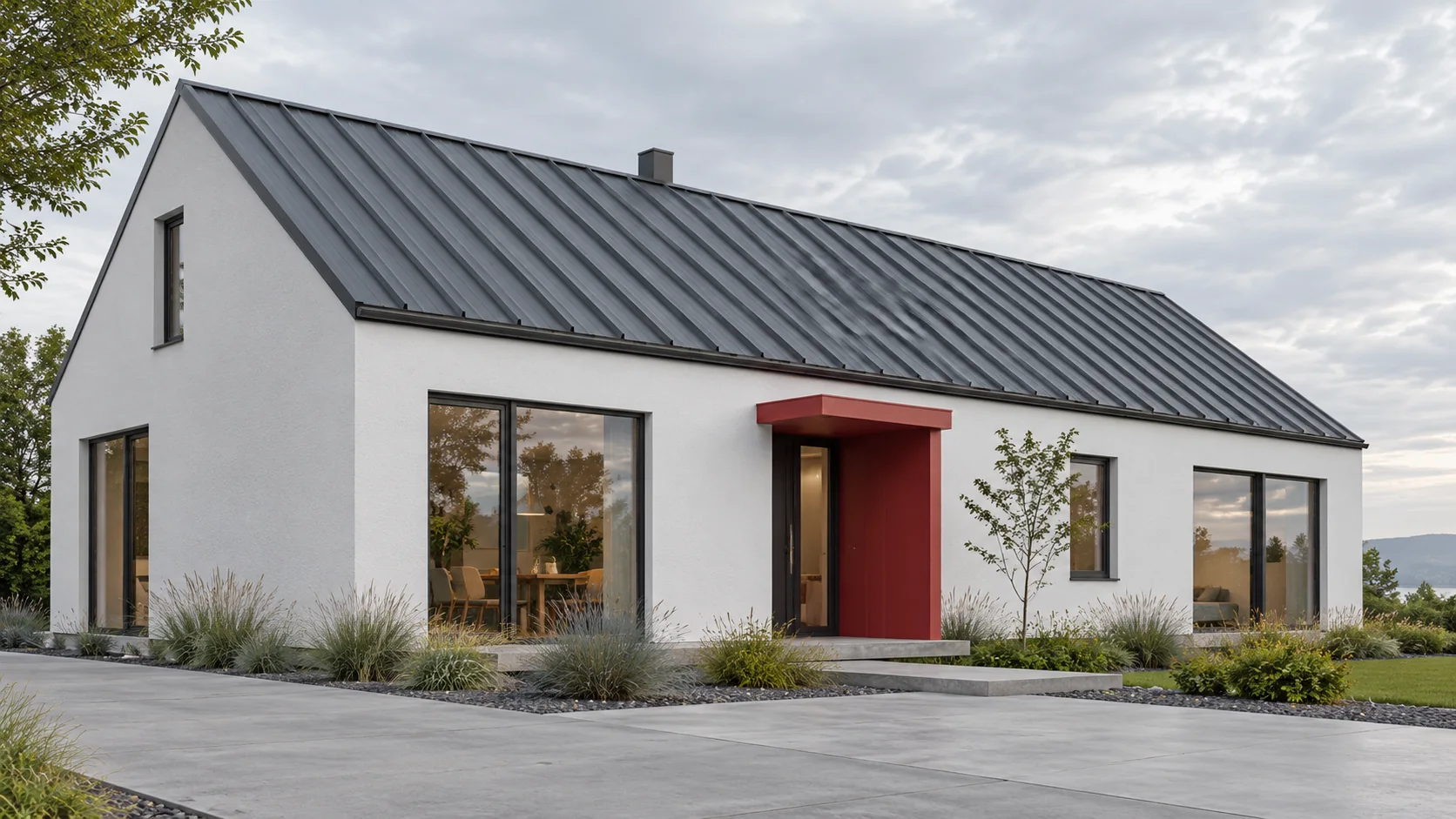
On a simple modern form, trapezoidal steel sheet can emphasise the rhythm of the roof and façade. On a more traditional house, the clear rows of tile-effect metal roofing may suit the building’s proportions better. Look at a sample from a few metres away and in side light. A small colour square will not show how the shadow falls across the whole roof slope or how strongly the profiles will be visible.
Can one material be laid on the other’s substructure?
This should not be assumed. With tile-effect metal roofing, the batten spacing is linked to the position of the steps and the covering module. For trapezoidal steel sheet, the choice of supports results from the specific section, thickness, span arrangement and loads. Even if both sheets have a similar steel thickness, they may require different support.
Fastenings and the bearing width should also be checked. A taller trapezoidal profile is not in itself permission to remove part of the battens. Conversely, a dense substructure prepared for another material can complicate ventilation or flashing details. Before changing the covering, ask for the entire system to be checked. This is easiest to do before purchase and installation of the substructure.
What should be checked for pitch and connections?
Each system has its own conditions of use. The permissible pitch depends not only on the name of the material but also on the joints and the design of the layers beneath it. Do not choose the lowest value found for any sheet. A long roof with a transverse joint may place different requirements than a short sheet without such a junction.
With trapezoidal steel sheet, the orientation of the groove and overlap relative to the water path is important. With tile-effect metal roofing, the geometry of the transverse profiles is added. In both cases, the eaves, ridge and openings must be resolved. The right profile will not compensate for a badly made roof valley or chimney flashing. These places should be drawn before deciding on the material.

How does the quantity of sheet ordered change?
An example trapezoidal roof sheet T18 has a coverage width of 1.10 m, and the selected flat module of tile-effect metal roofing 1.21 m. On a roof slope 6.8 m wide, seven strips of trapezoidal sheet or six strips of modules are needed across the roof. This gives nominally 7.70 m and 7.26 m of coverage width. The length and number of rows require a separate calculation.
This example does not determine the costs. Extreme cuts, transverse laps and sales formats can change the result. Compare the layout on the full drawing. If the roof has corners or dormers, the difference in cover width is only one of the factors. You must not multiply the geometric area by the lowest rate and treat the result as a ready order.
Will trapezoidal steel sheet be noisier or colder?
Both coverings discussed are thin steel sheets. The home’s insulation is formed by other roof layers. For comfort, their thickness, continuity and tightness matter, as well as the lining on the room side. The external profile does not provide a basis for calculating the U-value of the entire assembly.
The same applies to sound. The sound of rain heard under an open shelter does not describe the conditions in a properly designed attic bedroom. If quiet is particularly important, a complete system must be selected and sound transmission paths reduced. The anti-condensation layer on the sheet does not replace insulation or the entire acoustic solution.
How to close the comparison before buying?
Establish the same usage class of the coating, the scope of accessories and the layers under the covering. Then compare the full purchase quantity, fabrication, transport and crew labour. On a simple roof, trapezoidal steel sheet may give an economical layout, but complex details can change the cost proportions. Tile-effect metal roofing also requires a complete set, not just the panels.
The choice should match the shape of the house and the way it is used. Before ordering, check the colour compatibility of the roof, façade and drainage. Also agree the installation penetrations and future mounting of equipment. This way the covering becomes part of one design, not a change introduced only when the structure and other orders are already in place.
Questions and answers
Is trapezoidal steel sheet intended only for halls and garages?
No. It can also be used on a house if the specific variant and the entire roof system meet the project requirements.
Does the same colour mean the same durability for both coverings?
No. Colour does not describe the steel thickness, the type of protection or the coating parameters. The exact material variants must be compared.
7 branches. Materials closer to your project.