Roofs and details
Mechanically seamed or snap-lock roofing: how the joints differ
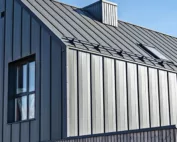
The term ‘standing seam roof’ covers several different solutions. Traditional metal strips are closed by folding the edges. A snap-lock panel has a factory-formed joint. A similar appearance of the finished roof surface does not mean the same installation rules. The differences should be established before choosing the substrate, strip lengths and flashings. Adjacent strips have prepared edges that are joined and closed with sheet metal tools. Depending on the system, a single, angled or double seam is used. With a double closure, the edges undergo an additional folding stage. This is not the same operation as pressing down a ready-made snap lock.
How does a traditionally folded standing seam work?
The type of joint is selected to suit the material, pitch and roof requirements. Solutions for zinc-titanium sheets do not automatically become suitable for coated steel. The rules for working, movement and surface protection differ. When talking to the contractor, it is therefore worth specifying the material and system instead of settling for a general order for ‘standing seam’.
What distinguishes a single closure from a double one?
The difference concerns the formation of the joint and its behaviour towards water. In traditional systems, a double standing seam is sometimes intended for less steep slopes, while angular joints have a different range of application. One should not derive a single pitch limit for all metals and products from this.
With a low slope, additional seals, the length of the strips and the way cross joints are made can be significant. The longitudinal joint along the slope and the cross joint are separate details. The word ‘double’ does not mean that the roof can be flat or remain under standing water. The entire assembly and the requirements of the specific technique must be checked.
How is a snap-lock panel constructed?
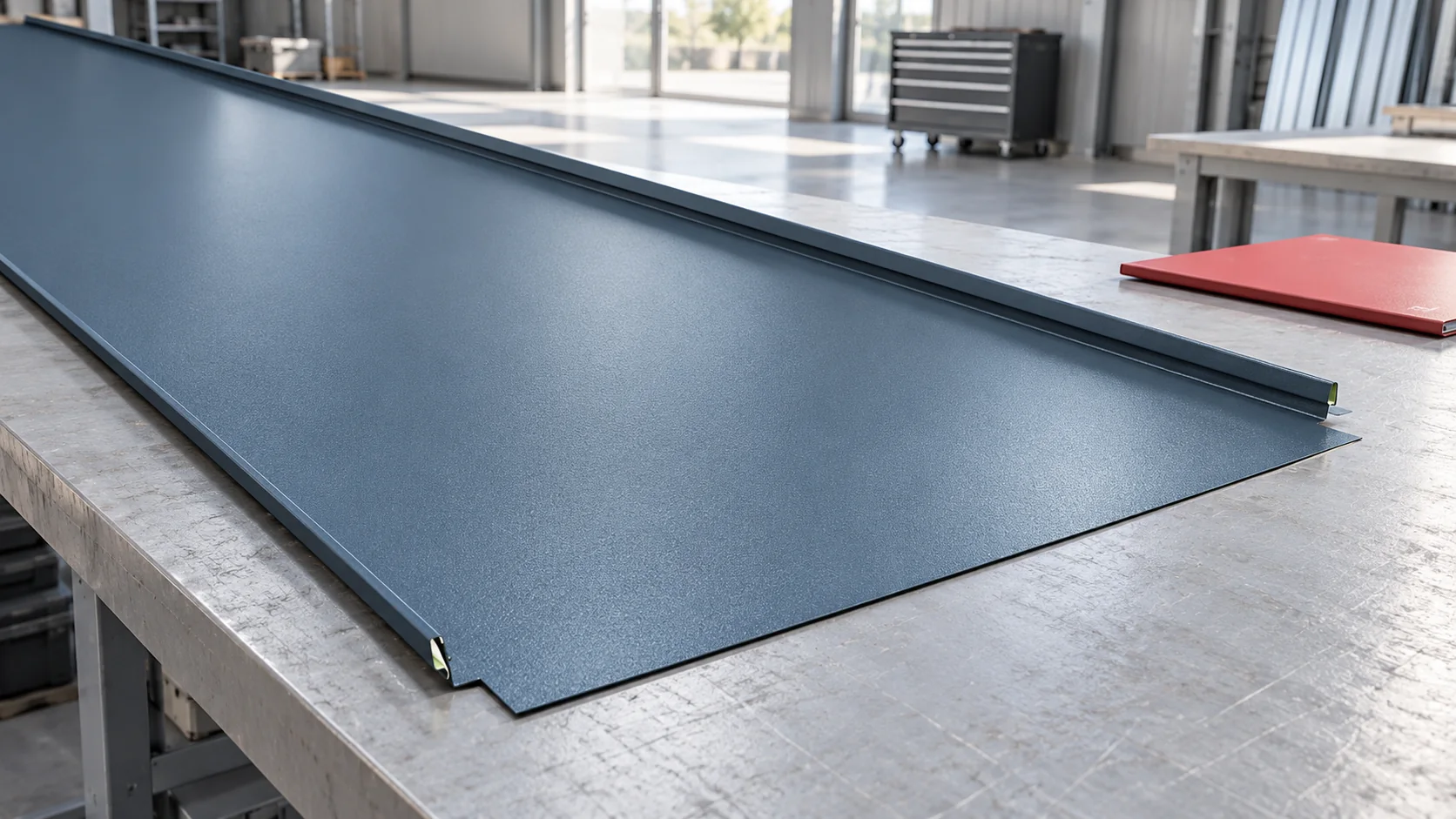
The panel has edges formed during production. The joint closes in the manner intended for this profile, without performing a traditional double fold along the entire length. In the selected family of steel panels, there are covering widths of 300 and 510 mm and a seam profiling height of 24 mm. These are parameters of a specific geometry, not of the entire category.
The factory seam requires precise alignment of the first strip and full closure. Subsequent panels should not be stretched to hide an alignment error. If the joint offers unusual resistance, the axis, the substrate and the condition of the edges must be checked. A seam damaged during transport can make installation difficult even when the large flat part of the panel looks good.
How do the substrate and fixings differ?
A traditional standing seam usually works with a continuous substrate and a suitable separating layer. The strips are fixed with elements intended in the system, including fixed and sliding clips. Their arrangement results from the design. They are not replaced by random screws passing through the visible surface.
Some snap-lock panels can be installed on battens, while other systems require full boarding. The choice depends on the product and load conditions. Pre-formed fixing holes also serve a specific purpose. Preparing the substrate ‘as for any steel sheet’ can cause problems later. The roofing system should be selected before the substructure is determined.

Why must the metal sheet be able to move?
Metal changes length with temperature. A long strip requires fixing that holds it on the roof while allowing for the anticipated movement. In traditional standing seam, appropriately selected fixing zones serve this purpose. In snap-lock panels, the holes and the way screws are seated are among the relevant factors.
Restricting movement can lead to stress and visible waviness. This also applies to connections with the chimney, eaves and ridge. An accidental rigid point must not be created by an additional screw. The production length limit and the recommended strip length on the roof are not necessarily the same. Both parameters must be determined before ordering.
What should be compared before choosing a contractor and system?
Ask for a description of the substrate, fixings and the details for the chimney, roof valley and top edge. Establish whether there will be cross joints on the roof and how they will be executed. Traditionally folded standing seam requires the right tools and the skill to form details. Snap-lock panels also require experience, particularly with complex geometry.
In the estimate, compare complete variants. The difference may include the covering, separation layer, flashings and labour. Also inspect a larger area of the trial covering. Narrow and wide strips divide the volume and reflect light differently. Choose the solution whose appearance suits the building and whose installation rules are known to the whole team.
Questions and answers
Can a click panel be additionally crimped like a traditional standing seam?
This should not be done without explicit approval. The factory lock has its own geometry, and accidental folding can damage it or alter the behaviour of the connection.
Does every standing seam require full boarding?
No. This depends on the selected system. Some snap-lock panels allow a batten substructure, but its parameters must correspond to the specific solution.
7 branches. Materials closer to your project.