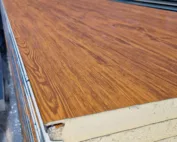
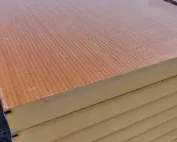
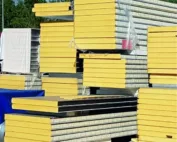
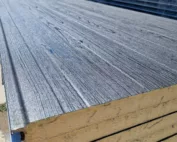
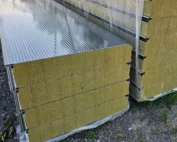
PIR insulation
PIR in a wall specification: reading thermal, fire and acoustic requirements
If a wall schedule says only “100 mm PIR”, neither the product to be supplied nor the evidence required from the contractor is clear. Separate the requirements first: some relate to a material, others to the complete wall and its joints. Against each figure, note what it describes and where it comes from. This lets you compare a proposal with the design without attributing a tested wall assembly’s performance to a board alone. Here is how to review the information before accepting a substitution.
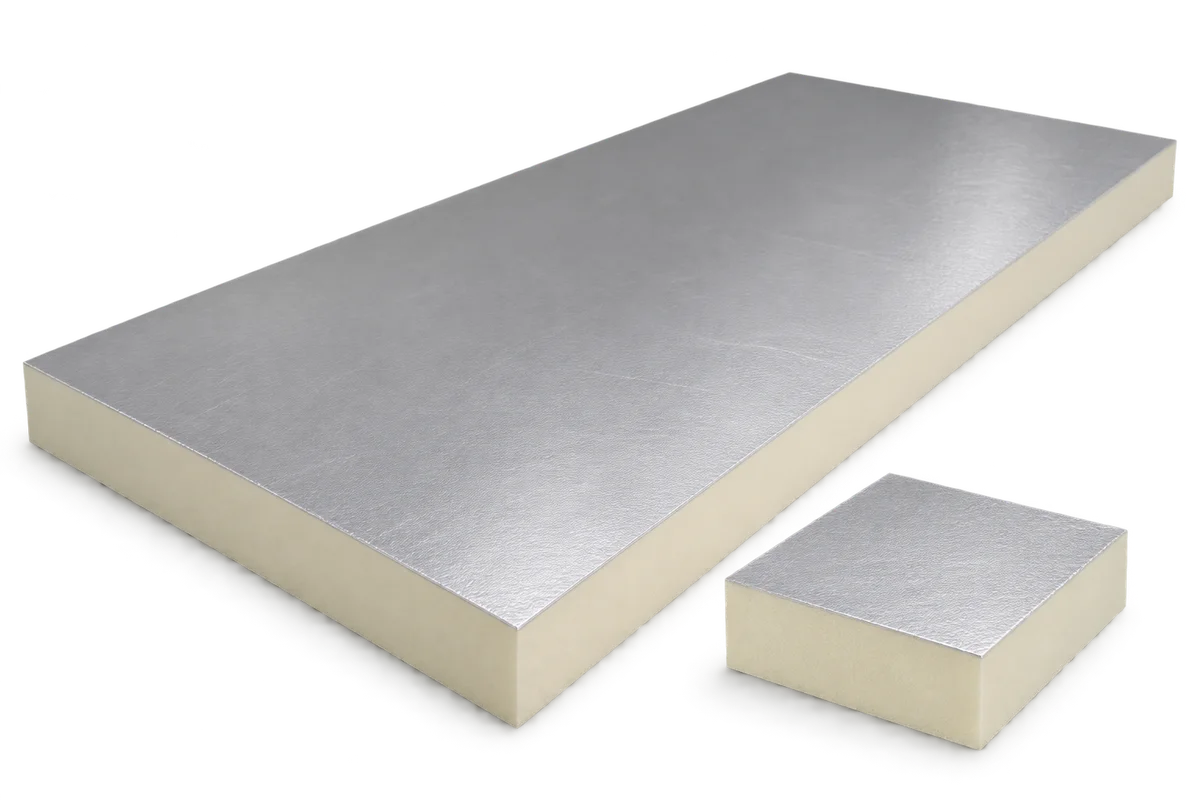
Start with the wall reference
Match the quote to a wall reference on the drawing. In the same hall, an external wall and an internal partition may have different jobs. A result for one does not automatically answer a question about the other.
Layer resistance versus wall performance
A board data sheet may give thermal conductivity or declared resistance for a thickness. The design schedule may instead give a U-value. Label these columns with their full names and units.
If the supplier quotes a value for the complete wall, find the build-up on which it is based. A change in framing centres or fixing method may mean that the calculation needs checking again.
Two different fire questions
Reaction to fire describes a product’s behaviour under specified test conditions. Identify the tested product and its facings. Do not assign a finished element’s classification to the bare core.
Fire resistance of the assembly answers a different question. If the design specifies a duration in minutes, check whether the evidence covers that construction, its joints and supports. The name of the foam is not this evidence.
Reading the acoustic evidence
Establish whether the aim is to limit sound passing through the wall or to reduce reverberation inside the room. These are different objectives. A sound absorber’s catalogue entry is not evidence of the wall’s sound insulation.
Mark doors, grilles and service penetrations on the acoustic drawing. Even valid evidence for an uninterrupted wall section does not establish the performance of the wall with these openings.
Check the scope of the evidence
Compare the proposal with the specimen description or the stated field of application. Record any differences in thickness, facing or supporting structure for review; a shared product family name is not a match.
Check the document revision. If the quotation and report show similar but different designations, ask the manufacturer to explain how they relate to the product being ordered.
What to submit for approval
Prepare a one-page schedule: design requirement, proposed solution, supporting reference and open question. Leave a missing test result blank; do not fill it with a figure for a similar product.
Attach the dated section and revision number to the agreed schedule. The person checking delivery will know both the board thickness to look for and which design revision to compare it against.
7 branches. Materials closer to your project.