Roofs and acoustics
Rain or vibrating sheet metal? Tracing noise under a metal roof
Before you compare ways of silencing the noise, establish when it occurs and where it is strongest – for rain, note its intensity, and for wind, the direction and strength of the gusts. This distinction is needed because rain and wind have a different character, and their sources may lie in different places. A damping layer under the metal sheeting can reduce the sound of rain, but its test result applies to the described test assembly; the final effect in the room depends on the sheet profile, the method of support and the type of sound, so do not transfer a result from one roof to another without checking exactly what was tested and what it was compared with.
First the source, then the solution
Record what the weather was doing at the moment the noise appeared. Steady tapping during rain gives the contractor a different clue from a brief vibration in a gust of wind. Also note the room and the location where it is heard most clearly. Such a note will make it easier to check whether the source is to be sought across the whole roof slope, or at the window, chimney or flashing.
Inspecting the fixings, flashings and penetrations on the roof often narrows the problem down. A loose fascia board or a poorly seated fastener can transmit vibration or generate noise that an extra layer from inside will not eliminate. Tightening or correctly setting the fasteners according to the system instructions is often cheaper than adding materials, but it must be checked, because excessive clamping pressure also changes how the covering performs.
What a layer under the metal sheet does and does not do
For a declared acoustic improvement, look for the description of the sample and how it was supported. The result of a measurement of the sound of raindrops on a specific sheet does not automatically determine the noise level in a bedroom under a different roof. Ask for clarification of what sound was measured and to which solution the result was referred. Only then can the suitability of the damping layer in the system under consideration be assessed.
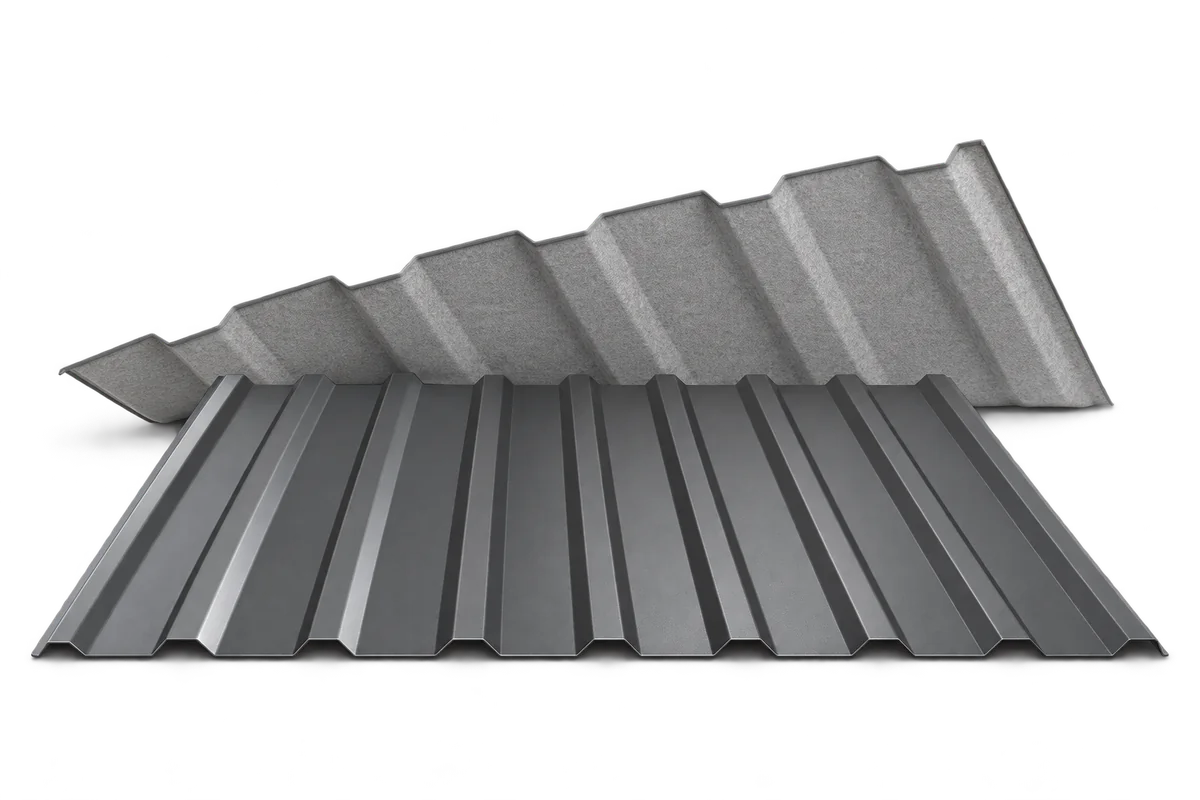
Some roof coverings can be ordered with a factory-applied fleece layer. Depending on the material and how it is bonded to the metal, this layer can reduce the effects of condensation, improve acoustics, or do both within a defined range. The name "fleece" alone does not denote a single product with fixed properties – check the data sheet for its intended purpose and conditions of use. This layer is often helpful where the underside of the covering remains exposed, but it does not replace a full intermediate separating layer.
Thermal insulation is not the same as acoustic insulation
PIR offers good thermal performance at a low thickness, but its thermal advantage does not automatically mean better acoustics than mineral wool. Fibrous materials can reduce sound energy in the space between the layers, yet the mass of the assembly and its connection to the structure also matter. Assess each component within the system, not in isolation – adding up material thicknesses is not enough to predict the result.
If you care about both warmth and quiet, the design can combine different materials while maintaining the correct moisture conditions and fire requirements. Bear in mind that the same material fixed differently gives a different result for the whole assembly. Sound can bypass a well-designed section of roof through weaker points: windows, roof hatches, ventilation ducts and junctions with walls. Careful workmanship at the edges is therefore just as important as the choice of material between the rafters.
Compare quotes in context, not just the numbers
When comparing quotes, ask what exactly was tested and what the result was compared against. Establish whether the subject is rain noise, airborne sound transmission or the reduction of reverberation in the hall. The Rw index relates to airborne sound insulation and is not a direct measure of how loud heavy rain is under a given sheet. Without that context, two figures from brochures can look similar even though they describe different phenomena.
A reliable assessment requires the same method and a similar configuration. So do not base your decision on a single number. Ask the contractor to describe the expected effect and the scope of works, and where the nuisance is great, consider measurement and analysis of the build-up rather than buying a random mat. In a new house, define the acoustic requirements before ordering the roof, taking into account rooms directly beneath the roof slope and noise from the surroundings.
Ventilation and the sequence of works
Do not close the required ventilation paths in pursuit of quiet. Air inlets and outlets have a defined function, and blocking them at random can cause a moisture problem beneath the covering. If acoustic improvement requires additional solutions at these points, they must preserve the intended airflow. It is a detail that is easily overlooked when comparing materials, and its effects only emerge over time.
In an existing building, start by checking the quality of workmanship. Define the scope of works before the sloping ceilings are finished, while access to the connections is still easy. The plan should cover sound, moisture and safety in use at the same time, so that making the roof quieter does not create a new problem requiring the freshly finished loft to be demolished.
Limits of the options and detail costs
Every option has its limits. An extra layer from inside will not fix a loose fascia board, and factory fleece will not replace a full barrier. Acoustic measures must not compromise ventilation or moisture conditions. Costs arise not only from the material price but also from the need to set fasteners correctly, seal penetrations and maintain continuity of the layers – these details determine the result on a given building.
So before comparing construction methods, gather information about the noise source and the condition of the fixings. Only then compare the parameters, bearing in mind that they relate to specific assemblies. This order avoids spending on solutions that do not address the actual cause of the noise and helps match the scope of work to the specific roof.
7 branches. Materials closer to your project.